









Page 11

Lagos—The Heartbeat of Nigeria
0
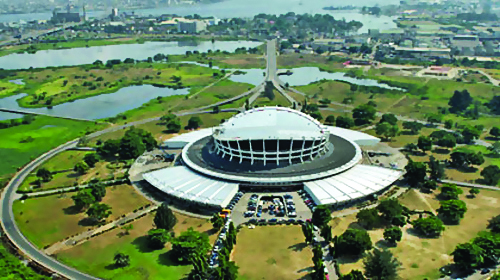
National-Theatre-Lagos

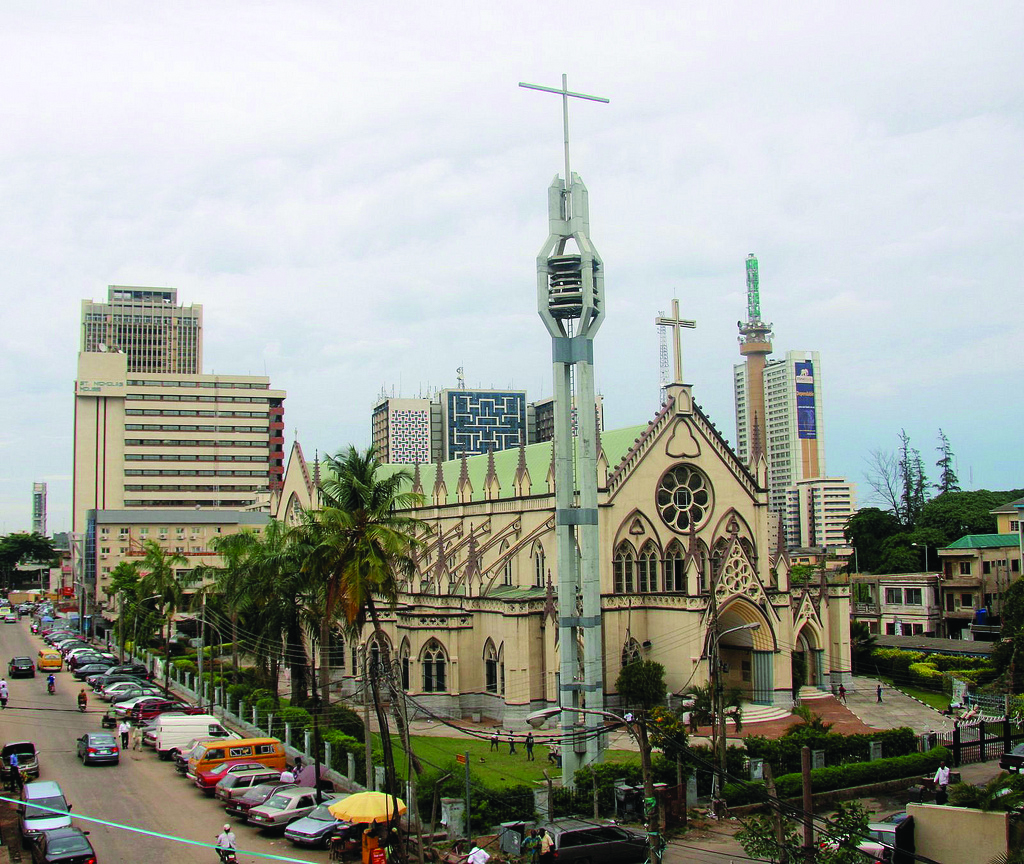
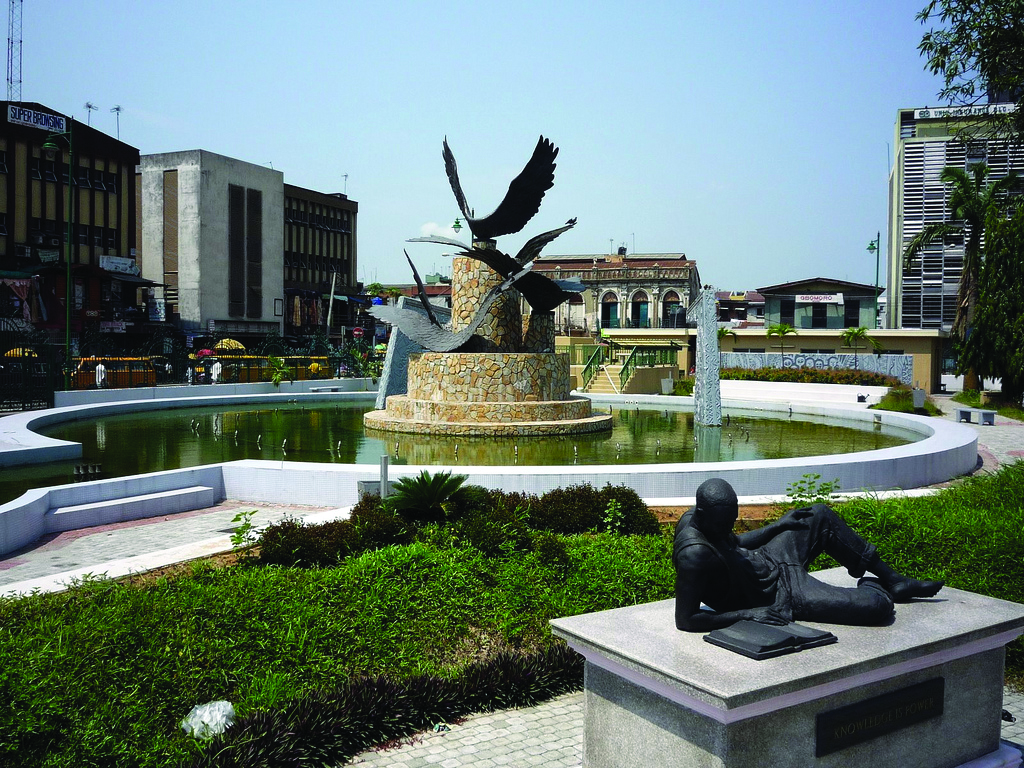
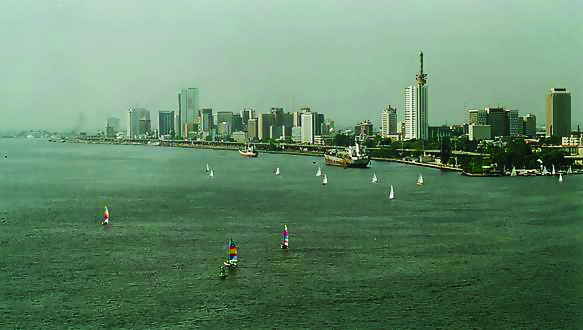
Lagos is a port city and the most populous city in Nigeria. Officially, the population of Lagos was last recorded at 7,937,932. Lagos is the second fastest growing city in Africa and the seventh fastest in the world.Lagos was originally inhabited by the Awori subgroup of the Yoruba people.

Under the leadership of their Olofin, the Awori moved to an island now called Iddo and then to the larger Lagos Island. In the 15th century, the Awori settlement was attacked by the Benin Empire following a quarrel, and the island became a Benin war-camp called “Eko” under Oba Orhogba, the Oba of Benin at the time. Lagos is a metropolitan area which originated on islands separated by creeks, such as Lagos Island, fringing the southwest mouth of Lagos Lagoon while protected from the Atlantic Ocean by long sand spits such as Bar Beach, which stretch up to 100 km east and west of the mouth. From the beginning, Lagos has expanded on the mainland west of the lagoon and the conurbation, including Ikeja and Agege, now reaches more than 40 km north-west of Lagos Island. Some suburbs include Ikorodu, Epe and Badagry, and more local councils have recently been created, bringing the total number of local governments in Lagos to 57.

Lagos Mainland Most of the population lives on the mainland, and most industries are located there too. Lagos is known for its music and night life, which used to be located in areas around Yaba and Surulere In recent years more night clubs have sprung on the island, making the island, particularly Victoria Island, the main nightlife attraction. Lagos Mainland districts include Ebute-Meta, Surulere, Yaba (location of the University of Lagos and Ikeja, site of the Murtala Muhammed International Airport and capital of Lagos State.Greater Lagos includes Mushin, Maryland, Somolu, Oshodi, Oworonsoki, Isolo, Ikotun, Agege,Iju Ishaga, Egbeda, Ketu, Bariga, Ipaja, Ajah and Ejigbo. The city of Lagos is the main city of the south-western part of Nigeria. Some rivers, like Badagry Creek, flow parallel to the coast for some distance before exiting through the sand bars to the sea. The two major urban islands of Lagos in Lagos Lagoon are Lagos Island and Victoria Island.
These islands are separated from the mainland by the main channel draining the lagoon into the Atlantic Ocean, which forms Lagos Harbour. The islands are separated from each other by creeks of varying sizes and are connected to Lagos Island by bridges. The smaller sections of some creeks have been sand filled and built over, however. The Islands of Lagos.. Lagos Island contains a central business district. This district is characterized by high-rise buildings. The island also contains many of the city’s largest wholesale marketplaces (such as the popular Idumota and Balogun markets). It also has the National Museum of Nigeria, the Central Mosque, the Glover Memorial Hall, Christ’s Cathedral (CMS), and the Oba Palace.

Though formerly in a derelict condition, Lagos Island’s Tinubu Square is a site of historical importance; it was here that the Amalgamation Ceremony that unified the North and South protectorate to form Nigeria took place in 1914. Ikoyi Ikoyi is situated on the eastern half of Lagos Island and joined to it by a landfill. Ikoyi is also connected to Victoria Island by a bridge carrying a main road over a Five Cowrie creek. Ikoyi housed the headquarter of the federal government of Nigeria and other buildings owned by the government -including the old federal secretariat complex. The complex today is on reestablishment. In Ikoyi there are military and police barracks, a top-security prison and a federal high court of Nigeria. Ikoyi also has a number of hotels, night clubs, a recreational park and one of Africa’s largest golf courses. Originally a middle class neighbourhood, in recent years, it has become a fashionable residential enclave for the upper middle class to the upper class.

There are also commercial activities in Ikoyi which is spotted in increasing number of offices, banks and shopping complexes. The commercial section is concentrated in the South-West. Victoria Island Victoria Island with its annex is situated to the south of Lagos Island. It has expensive real estate properties and for that reason, many new luxury condos and apartments are blooming up everywhere.

Along with Ikoyi, Victoria Island occupies a major area in the suburbs of Lagos which boasts of several sizable shopping districts. On its sea shore along the Atlantic front, there is environmentally reconstructed Bar Beach. Iddo Across the main channel of the lagoon from Lagos Island, there is a smaller settlement called Iddo. Iddo is also a railroad terminus and it is situated on the mainland. It is now connected to the mainland like a peninsula. Three major bridges join the island to the mainland. They are the Carter Bridge which start from Iddo, the Eko Bridge (formerly called the Second Mainland Bridge) and the Third Mainland Bridge -which passes through densely populated mainland suburbs through Lagos lagoon. Eko Atlantic City Eko Atlantic City is a planned 21st-century city, intended to be built on land reclaimed from the Atlantic Ocean. Already, most of the land has been reclaimed. The proposed development is targeting 400,000 residents and 250,000 commuters flowing daily to the island.

The project is planned to return the coast to its position in the 1950s and 1960s, reversing damage done by erosion. Administration Lagos is a State made up of 57 Local Government administrations and controlled by a central State administration led by the current Lagos State Governor, Raji Fashola. Metropolitan Lagos is not a municipality and has therefore no overall city administration. In fact there are 16 Local Government administrations that control Lagos metropolis. The Municipality of Lagos, which covered Lagos Island, Ikoyi and Victoria Island as well as some mainland territory, was managed by the Lagos City Council (LCC), but it was disbanded in 1976 and divided into several Local Government Areas (most notably Lagos Island LGA, Lagos Mainland LGA and Eti-Osa LGA. The mainland beyond the Municipality of Lagos, on the other hand, comprised several separate towns and settlements such as Mushin, Ikeja and Agege. In the wake of the 1970s Nigerian oil boom, Lagos experienced a population explosion, untamed economic growth, and unmitigated rural migration. This caused the outlying towns and settlements to develop rapidly, thus forming the Greater Lagos metropolis seen today. The history of Lagos is still evidenced in the layout of the LGAs which display the unique identities of the cultures that created them. Lagos Climate Lagos has a tropical wet and dry climate that borders on a tropical monsoon climate .

Lagos experiences two rainy seasons, with the heaviest rains falling from April to July and a weaker rainy season in October and November. There is a brief relatively dry spell in August and September and a longer dry season from December to March. Monthly rainfall between May and July averages over 400 mm (15.7 in), while in August and September it is down to 200 mm (7.9 in) and in December as low as 25 mm (1.0 in). The main dry season is accompanied by harmattan winds from the Sahara Desert, which between December and early February can be quite strong. The highest maximum temperature ever recorded in Lagos was 37.3 degrees Celsius and the minimum 13.9 degrees Celsius. Tourism Lagos, subsequent to the re-modernization project achieved by the current administration of Governor Raji Babatunde Fashola, is gradually becoming a major tourist destination, being one of the largest cities in Africa and in the world. Lagos is currently taking steps to become a global city.

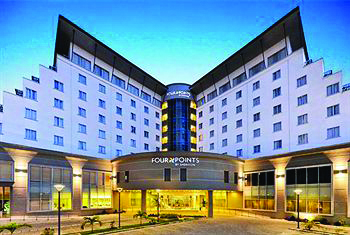
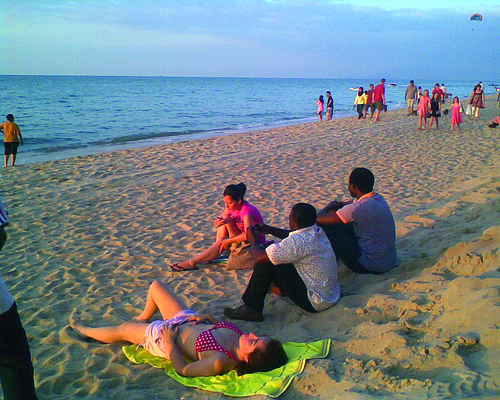
The 2009 Eyo carnival (a yearly festival originated from Iperu Remo, Ogun State) which took place on 25 April, was a step toward world city status. Currently, Lagos is primarily known as a business-oriented and a fast paced community.[25] Lagos has a number of sandy beaches by the Atlantic Ocean a few are Badagry beach, Eleko beach, Elegushi, Alpha beach. Two of the popular beaches include Bar Beach and Lekki Beach. Lagos has a variety of hotels ranging from three star to five star hotels. Other places of interest include The Tafawa Balewa Square, Festac town, Lekki Conservation Centre, The Remembrance Arcade and the Slave Jetty in Badagry For the newcomers to Lagos, one of the many ways to get around is look at some of the local sites like VConnect.com and LostinLagos.com.

They are like the local Yelp services. You can explore the Nigerian cuisine, Lebanese cuisine, Chinese cuisine and various other cuisines by looking up these local info websites. Some of the popular hotels include Welcome Centre Hotels, Sheraton Hotel and Towers, Federal Palace Hotel, Stop Over Motels, Ikoyi Hotel, Sofitel Lagos Moorhouse Ikoyi, Eko Hotels And Suites, and The Palmview Manor. Visitors are mostly attracted to Nigeria’s rich culture, entertainment scenes and vitality which Lagos city offers. Tourist attractions include Oba’s Palace, the Nigerian National Museum, Shrine of Fela, the beach resorts.
Enemies Of Marriage: How to fortify yours against them

0

By Oladipo Kalejaiye  Ph.D

A man was crying over a gravestone saying “why did you die? why did you die?” Another man questioned him. “Did your mother die?” “No”. “Your father?” “No”. But the man continued to weep profusely “why did you die?” “Well, who died?” He answered: “This was my wife’s first husband.”

For many couples, it has come to that. They daily regret and lament their decision to marry their mate. The marriage is a horror movie playing out in real time! A deceased Christian had the following written on his gravestone: “Beneath these stones do lie. Back to back, my wife and I. When the last trumpet the air shall fill, if she gets up, I’ll just lie still.” Wow! This Christian was willing to forfeit the resurrection in order to avoid any further co-habitation or interaction with his earthly spouse! Spouses who are still alive and can’t bear the nightmare of what they call marriage bail out through divorce.

Someone said “Love the quest, marriage the conquest, divorce the inquest.” Today, love quests that matured into marriage conquests are ending in bitter and sordid divorce “inquests”. If this article succeeds in helping your marriage to avoid becoming part of the “inquest” statistics, it has accomplished one of its primary objectives. I hope it does! Do you know that among Americans who have said their wedding vows, one out of three have been divorced at least once? George Barna, who directed a study on this, noted that Americans have grown comfortable with divorce as a natural part of life: “There no longer seems to be much of a stigma attached to divorce; it is now seen as an unavoidable rite of passage.

Interviews with young adults suggest that they want their initial marriage to last, but are not particularly optimistic about that possibility. There is also evidence that many young people are moving toward embracing the idea of serial marriage, in which a person gets married two or three times, seeking a different partner for each phase of their adult life.” You will agree with me that this prognosis is grim and scary.

However, your marriage does not have to help fulfill it. You can literally inoculate yours against the enemies of marriage. Sun Tzu, the ancient Chinese warrior, wrote in his classic The Art of War, “if you know your enemy and know yourself, you need not fear the result of a hundred battles. If you know yourself but not the enemy, for every victory gained you will also suffer a defeat.” Of course, it is obvious that if you know neither yourself nor the enemy, you have lost the battle even before it starts! I have identified below some of the enemies of marriage and what you should know about yourself so that you may make changes that’ll help fortify yours against these enemies.

Enemy Number One: Lack of unshakable foundation.
Many Hollywood marriages are built on the foundation of beauty, money, success and fame. These are defective foundations. They are shifting and sinking sand. Therefore the marriages collapse fast. Have you asked yourself: What is the foundation of my marriage? If it is built on “sand”, then when the wind of life begins to blow and the rains of life begin to fall and the flood of life begins to beat against it, it will crumble, but, if it is built on the “rock”, it will stand. There was a shipwreck and a young boy was the only survivor. He had struggled against the waves to swim to a rock he saw not too far away from him. He held onto the rock for three days until he was rescued. When asked whether he was not afraid being alone he replied, “I never stopped shaking since I bear-hugged the rock, but the rock itself did not shake.” There is another rock the bible talks about. He is called the Rock of Ages.

Enemy Number Two: Lack of allowances for daily irritations.
A couple had been married for fifteen years and is now having more than the usual disagreements. The wife came up with the idea of creating a Fault Box in which both will drop daily notes of irritable habits of the other spouse. At the end of the month, they’ll examine the notes, apologize to each other and cease their irritable habits. So, she diligently dropped off into the box notes of daily irritations: leaving the jelly top off the jar, wet towels on the shower floor, dirty socks not in the hamper and on and on. At the end of the month, after dinner, they opened the Fault Box and the wife began to read out her notes of what irritated her daily during the month. The husband apologized and promised to make amends. Now it was her turn. She noticed a lot of notes were also there but all of them have the same message, “I love you”! The instruction from the Rock in Colossians 3:13 says you must make allowances for each other’s faults… He also says you should always cut your spouse some slack and accept them the way He The Rock has accepted you: John 6:37: “The Father gives me my people. Every one of them will come to me, and I will always accept them”. God says “I just love you, period! Not because of what you do! ” Jesus treated us much better than we deserve. He made us acceptable. Not that we changed. He simply says “because of me, you are acceptable to God”. Accept your spouse as God has accepted you- unconditionally. Until they overcome their irritable habits, accept them. It does not mean you approve of these irritations. It simply means you are obeying the marching orders of the Rock and by so doing you are fortifying your marriage against this enemy number two. Lack of making allowances for your spouse’s daily irritations is an enemy of marriage. Is yours fortified against it?

Enemy Number Three: Lack of loving acts.
Love is not an emotion because emotions cannot be commanded at will. For example you cannot command someone to cry or to be happy or be sorrowful. These are emotions and often uncontrollable. Commanding someone “don’t worry, be happy”, won’t cut it for a grieving spouse. It is a myth that you can “fall in love” the way you uncontrollably, accidentally fall into a ditch! Love can cause strong emotions but is itself not an emotion. Love is more than sentimentality. More than arousal. More than attraction. Love is a behavior. Love is action. Love is a commitment you make to do something. You make a decision to love or not to love. That is why God commands us to love our neighbors as ourselves and the husbands to love their wives as Christ loves the church and gave Himself for her. 1 John 3:18 says “Let us love not with words but with action and in truth”. …

…Continue reading in the Life and Times 2013 Spring Edition

Achebe is dead but he lives

0

By Chika Unigwe, Ph.D

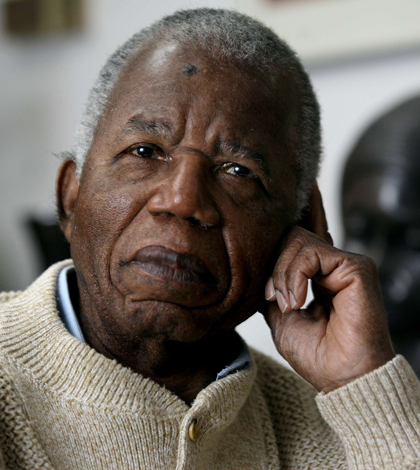
In his last book, There Was a Country, Achebe writes: ‘As a writer I believe that it is fundamentally important, indeed essential to our humanity, to ask the hard questions, in order to better understand ourselves and our neighbours.’ This role of the writer was one Achebe was very committed to.

It informed his writing starting with Things Fall Apart, his best known work, published in 1958 at a time when issues of identity and nationhood were urgent on the African continent to his latest book which explores the ways the leadership of Nigeria has failed Nigerian citizens. But it was not just in writing that Achebe asked the hard questions. He lived it too. An ardent believer in the value of speaking truth to power, Achebe was a fearless, vocal critic of Nigeria’s failed governments.

In 2004 and 2011 he rejected to accept the National Award given him by the Obasanjo government and the Goodluck Jonathan government respectively. Mincing no words in explaining why it was against his conscience to accept the award, Achebe wrote to Obasanjo, “Nigeria’s condition today under your watch is, however, too dangerous for silence. I must register my disappointment and protest by declining to accept the high honour awarded me in the 2004 Honours List.” In 2011, he wrote to Goodluck Jonathan “the reasons for rejecting the offer when it was first made have not been addressed let alone solved.’ He taught me by the way he lived that integrity is always, always possible. As a writer, Achebe was one of my earliest role models.

I remember reading Things Fall Apart at an age when my literary fare consisted mostly of books by Enid Blyton, and school taught me nothing of pre-colonial Igbo land. I loved the simplicity of the writing. But on a deeper level, that book opened up to me a whole new world at an age I was learning at school that Mungo Park ‘discovered’ the River Niger and that my forefathers were ‘heathen savages’ saved by colonization. It showed me that history taught in schools was not always accurate, and gave me the hunger to seek my history. More importantly, it gave me permission to tell my own story, my own way.

Achebe is dead but he lives. In his works, and in the works of all the writers he inspired all over the world.

Eradicating Poverty In Nigeria

0

BY CLEM AINABE, PH.D

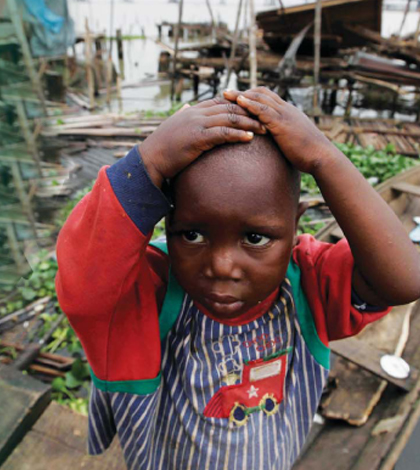
Poverty – the condition of being poor; lacking or deficient in necessary properties. At any state, poverty can be humiliating and/or dehumanizing. In the abject state it can drive good, upright citizens, to do things they ordinarily will not do in order to survive. The percentage of Nigerians living in absolute poverty – those who can afford only the bare essentials of food, shelter and clothing, according to the national bureau of statistics, rose to 60.9 percent in 2010, compared with 54.7 percent in 2004. The sad thing about this is that everyone who juxtaposes Nigeria’s natural and human resources with its population invariably comes up with the same result – no Nigerian or anyone in Nigeria should be living in poverty.

Nigerian government, at different phases/stages had had to take on poverty and its attendant pains, perpetrated on the citizens. From mid 1980s to now, different policies have been put in place with the intention, superficial or genuine, of making major dents on poverty. Among them are: Directorate of Food, Roads and Rural Infrastructure (DFFRI), Better Life Program (BLP), Directorate of Employment (NDE); People’ Bank of Nigeria (PBN); Community Bank (CB); Family Support Program (FSP); Family Economic Advancement……

…Continue reading in the Life and Times  2013 Spring Edition


The Drug Called Bread

0

By Olufemi Saliu, M.D.

I changed my diet: ate plenty of vegetables, a minimum of four fruits, and a handful of raw cashew nuts, a table spoon of ground flaxseeds a day, and moderate amount of grains. I lost weight but my belly fat was persistent. One day I decided to let go of bagel-and the belly fat melted away.

That was the situation of things until last summer when I stumbled on a Registered nurse in my hospital reading a very fascinating book: Wheat Belly, by William Davis, M.D. In addition to giving me an insight into why I lost my belly fat, it threw light on the hazards of modern day wheat.

“If God did not want us to eat wheat, He wouldn’t have created it,” remarked a close relative during a visit from Nigeria, after I told him about the book I just ordered from Amazon.com that could turn what I’d told him about wheat upside down: whole wheat bread should be preferred because of the intact fibers that slow down its rate of absorption thereby mitigating against a spike in blood glucose. My brother was right: the wheat created by God was meant for human consumption. However, the food scientists have-to increase yield, and cut the cost of production-genetically transformed the original wheat.

This modern day wheat is fraught with a number of health hazards. The key to the hazards of wheat is in how efficiently it increases the blood sugar: it’s amazing to know that two slices of whole wheat bread increase blood sugar more than two tablespoons of pure sugar. It is the concept of this dynamics that I’ll try to elucidate in this article.

The predominant carbohydrate in wheat, amylopectin A is so easily digested in the gastrointestinal that its product, glucose is rapidly absorbed. On the other hand, the main carbohydrate in legumes (beans), amylopectin C is so resistant to digestion that it’s passed on to the bacteria in the colon for digestion. The bacteria break it down to nitrogen and hydrogen, not glucose. So wheat increases blood glucose; beans increase gas, and bulk in your colon. Persistently high blood sugar level may be compared to a car going at 150 MPH where the speed limit is 45 MPH. Cops are called in to maintain the order. In the blood, it is insulin. It drives the glucose into the cells. If you had your breakfast at 7am, by 9am the blood sugar would be so low that mental fatigue, hunger, and craving would set in. You’d be looking for donuts, bagels, coffee, or whatever you can find to eat. The two-hour cycle of high and low blood sugar can go on all day long. Eventually, the pancreas cannot meet the demand for insulin. Diabetes sets in.

During the cyclic activities of insulin, the sugar driven into the cells is converted to fat in the belly, and other parts of the body. That is the foundation of development of high cholesterol, obesity, coronary artery disease, heat attacks, and stroke. The belly fat is unique in the sense that it secretes estrogen, and inflammatory chemicals. The estrogen may cause breast development in obese males.

The inflammatory hormones are partly responsible for the numerous chronic diseases in obese people. A good example is arthritis. In addition to carbohydrate, wheat has protein. Gluten, the predominant protein in wheat may cause celiac disease in some people by provoking a unique immune response that inflames the small intestine, manifesting as abdominal cramps and diarrhea. This condition is treated by total elimination of gluten containing food: wheat products. “When I gave up bread for a few days, I was tired, cranky, and moody,” said a friend. “I’ll rather cut it down slowly,” she went on. Her friend at work told me she couldn’t stand her mood in those few days. “I’ll do everything except quit my evening bread,” remarked a relative, when I was in Nigeria last April. He habitually washed down a couple of slices of bread with cocoa drink before going to bed. “I’ve personally witnessed hundreds of people report extreme fatigue, mental fog, irritability, inability to function at work or school, even depression in the first several days to weeks after eliminating wheat” said Dr. Davis in the book, wheat belly. “Complete relief is achieved by a bagel or cupcake” he concluded. I think most people are addicted to bread, and wheat products. Gluteomorphin, a polypeptide isolated from gluten-from wheat-was shown by NIH scientists, in the brains of laboratory animals, to bind to the same receptor as morphine-and its effect is reversible with naloxone, the antidote to morphine. So I’m not surprised some people exhibit addiction, and withdrawal symptoms in relation to wheat products. I got my wife, and my sister, Joke to give up bread.

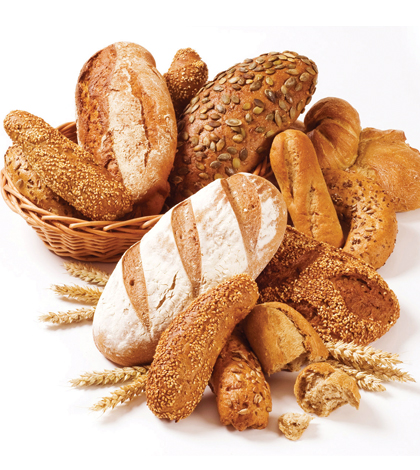
My relative in Nigeria has given up eating bread prior going to bed. After she stopped eating bread for weeks, my sister took a bite of bagel in her office in New Jersey. She went on to develop abdominal cramps. Joke was so sick that she said: I’ll never eat bread again. Some people develop such symptoms if they go back to eating bread, and wheat products. I didn’t have any cramps when I ate a little piece of cake on my son’s birthday. You might not be so lucky. My dear readers, if you are very serious about your health, I’ve got four words for you: say no to bread. By bread I mean everything made from wheat-white bread, whole wheat bread, bagels, croissants, sandwich, multigrain bread, cake, muffin, waffle, pancake, toast, cereal, donuts, cookies, pizza, and wheat pasta.

The general rule is before you eat anything, read the label; if it contains wheat, it’s not meant for you. “What then can we eat?” is the commonest question I get from friends, and relatives. You may eat anything but wheat: . Plenty of vegetables (variety) . Moderate amount of fruits (variety) . Moderate amount of whole grains such as oatmeal, quinoa, and brown rice. These grains are also available in flour form. . Legumes such as beans . Raw nuts such as walnut, cashew, and almonds .

Seeds such as flax seeds, pumpkin seeds, and chia seeds. . Fish, chicken, lean meet, and eggs. . Drink water but avoid soda, and malt drinks served at Nigerian parties (made from wheat). I habitually begin my day-by 6am- with a plate of salad made with kale (2oz), broccoli (5oz), bell peppers (6oz), and tomato (5oz); a cup of cooked oatmeal mixed with a table spoon of ground flaxseed; a handful of mixed raw nuts: cashew, walnut, and almonds; one banana-and a glass of water. A similar plate of salad is usually a part of my lunch, and dinner as well. In about a year on any-food-but-wheat diet, my cholesterol dropped from by 100 points to 130.

I don’t get tired in the mornings anymore. I’ve not had coffee in over fifteen months. My joints are strong, and mobile. You too may say no to bread, and construct your own any-food-but-wheat diet. Try it for six weeks, and send an email about your experience to mail@lifeandtimesmagazine.com. If you’re already on medications, you may need monitoring-and need for medications might change. Don’t be too far away from your physician.

Finally, do not take my word for it. Get your own copy of the book: Wheat Belly, by Dr. William Davis. You would never see food the same way again.

_____________________________________
Read in the Life and Times  2013 Spring Edition

The P-Square Phenomenon

0

P-Square are a Nigerian R&B duo composed of identical twin brothers Peter and Paul Okoye. They produce and release their albums through Square Records. In December 2011, they were also signed to Akon’s Konvict Muzik label. In May 2012, they also signed a record distribution deal with Universal Music South Africa.

The story of P-Square began in St. Murumba secondary school, a small Catholic school in Jos, Nigeria. Identical twins Peter and Paul joined their school music and drama club where they began singing, dancing, and mimicing songs by MC Hammer, Bobby Brown and Michael Jackson. They later formed an a cappella quartet called “MMMPP” (M Clef a.k.a. Itemoh, Michael, Melvin, Peter and Paul). Drawing inspiration from their music idol Michael Jackson, they began break dancing, formed the group called “Smooth Criminals” in 1997.

They dropped M Clef from the group “MMMPP” which later was changed to “MMPP”. Their artistic talent and precise dance routine soon made them household names in the city of Jos, where they performed at school functions and other occasions. Later in 1999, Peter and Paul returned to music school to develop their skills on keyboard, drums, bass and rhythm guitar. Their work includes the soundtracks for a number of films like Tobi, Mama Sunday, Moment of Bitterness and Evas Later in 1999, they applied to the University of Abuja to study Business Administration. The Smooth Criminals disbanded when its members left to various other universities. Subsequently Peter and Paul formed their own group, variously called “Double P”, “P&P”, and “Da Pees”, until they eventually settled on “P Square”. They are managed by Bayo Odusami aka Howie T, a seasoned concert promoter and the CEO of Adrot Nigeria Limited. In 2001, “P-Square” won the “Grab Da Mic” competition, and hence Benson & Hedges sponsored their debut album, titled Last Nite, which was released under Timbuk2 music label. P-Square was also nominated as “Most Promising African Group” in the Kora Awards three months after the release of their debut album. They eventually won the 2003 Amen Award for “Best R&B Group”.

In 2005, P Square released their second album, Get Squared under their own label, Square Records. This album was marketed nationwide by TJoe Enterprises, although they were still managed by Howie T of Adrot Nigeria Limited. The video for the second album held the #1 position on the MTV Base chart for four straight weeks. They have an ever growing fan base across South Africa with a particular stronghold of diehard fans in Cape Town. The group has performed alongside the following international artists like Ginuwine, Sean Paul, Akon and Busola Keshiro. The members of P Square are now located in Lagos. Late in 2007, they released their best selling album so far, Game Over. It has sold 8 million copies worldwide. In 2009, P-Square released their fourth studio album, Danger .

The album features collaborations with 2face Idibia, J Martins and Frenzy. The first single called “Danger” is a hip hop song with cutting synths and a frog bass baseline similar to an Eminem song. The video affirms this with the presence of clowns and staggered movements in front of the camera reminiscent of comical videos by Eminem They are also known for the close resemblance which the twins have to American R&B Superstar, Usher Raymond. On 4 April 2010, P-Square was named the Artist of the Year at the KORA All Africa Music Awards in Ouagadougou, Burkina-Faso while they were in London for a Concert at the Troxy, and they will receive a whopping sum of $1 Million Dollars as the Award Winners, in Ebebiyin City.

Albums
2003: Last Nite
2005: Get Squared
2007: Game Over
2009: Danger
2011: The Invasion International singles 2009 /2012: “E No Easy” (P-Square feat. J. Martins)
2012: “Positif” (Matt Houston feat. P-Square)
2012: “Chop My Money (I Don’t Care)”
2012: Alingo

Won
2006 Hip Hop World Awards: Best R&B Album (Get Squared), Best Music Video (Get Squared), Album of the Year Get Squared), Song of the Year (“Bizzy Body”).
2006 City Mag 9th Awards Show: Best Hip Hop Group
2006 Nigerian Music Awards (NMA): Album of the year (Get Squared), Music Video of the year (Get Squared)
2007 Channel O Music Video Award: Best Duo or Group
2008 Channel O Music Video Awards Best Duo or Group Video of the Year (“Do Me”), MTV Africa Music Awards
2008 – Best Group MTV Africa Music Awards
2009- Best Group 2010 KORA Awards – Artiste of the Year
2010 LIL PERRY PRODUCTIONS Producer of the Year
2012 Channel O Music Video Awards – Best Duo, Group or Featuring Music Video (“Chop My Money” with Akon and May D)

Nominated
BET Awards 2010 – Best International Act
KORA Awards 2003 – Most Promising African Group (Nominated)
MOBO Awards 2006 – Best African Act MOBO Awards 2008 – Best African Act
MTV AFRICAN MUSIC AWARDS- 2008

_____________________________________
Read in the Life and Times  2013 Spring Edition

LADY LARA OKUNUBI – Founder, Compassion Without Border

1

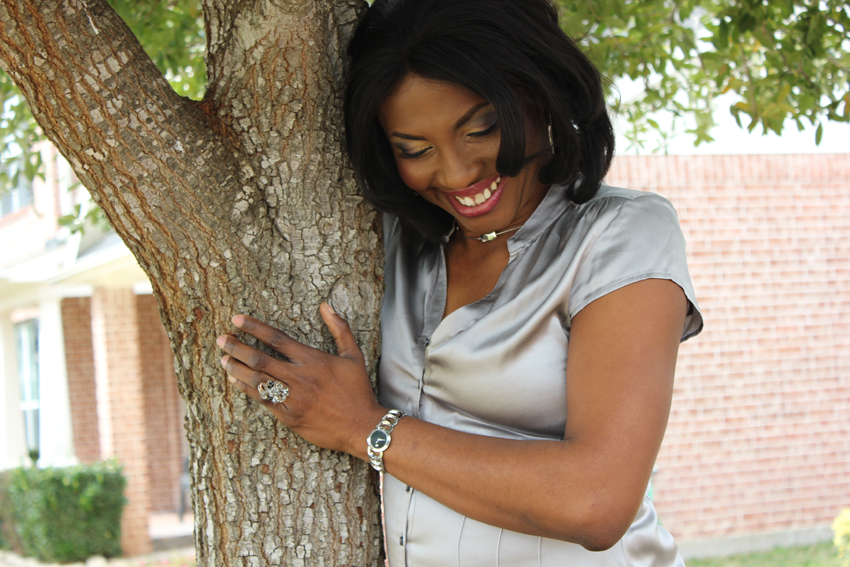
Madam Lara Okunubi is intangibly alluring to many people in the community. Whether she is participating in a fundraiser, knocking doors in support of a political candidate, rooting for Kobe Bryant and the Lakers, or hosting a weekly Friday Bible session with friends, she’s she does so with genuine enthusiasm. On Saturdays she’s at one function or the other supporting a community member and having a good time with friends. Sunday mornings finds Lady Okunubi at the door-step of her church as a Greeter, welcoming people into the sanctuary for service. Yet, this mother of four who runs two successful businesses (Monday through Saturdays) still finds time to undertake the charity of feeding the homeless on scheduled days. Chike Nweke, Publisher Life and Times Magazine sat down with Lady Okunubi to talk about “Compassion Without Border”, a charity she founded and supports, her dreams for our Community and her hopes for Nigeria…

Q: Of all the volunteer work that you do which one are you most excited about?

Ans: Without trivializing any of them I feel more privileged to be able to participate in the homeless outreach. For me it is not just about handing out a meal, it is about making each one of them feel like an individual, that they matter, that there’s hope for change even if they don’t see it now……that’s why we go to minister to their external needs, to let them know that they are not forgotten. It’s a relationship I uphold with passion and steady commitment.

Q: You have been feeding the homeless for quite some time now, Why and how did you get started and what has kept you going for these past twelve (12) years?
Ans: It was shocking for me to discover that there is homelessness and poverty in America, the supposed “land of milk and honey”. After interacting with some of the people on “skid row” and listening to their stories I realized how issues like anger, depression, hopelessness, low self-esteem can easily spiral into chronic stress, loss of confidence, mental illness, poverty and even homelessness, when there’s no support or intervention. They are not ordinary people, amongst them are veterans who have sacrificed their lives for others, some of them were professional at one point of their life and some are mothers with children. I grew up with this benign motive to contribute whenever there’s a need, whether it is money, time, ideas or resource. So, it is difficult for me to walk away from such provocative situation without the desire to want to be part of the solution. Anyone could fall into such predicament but for the endless Grace of God, so I am very appreciative of the privileges I have enjoyed in life. Do you know that there are 131,000 homeless people in California alone? The population has dropped by about 3.5% because some people are doing something about it. The passion to engage in this outreach started in fulfillment of a college requirement for one of my children but it soon escalated into a project when I realized the magnitude of this crisis. We have encountered children, some people from Nigeria, Ghana and other foreign countries that came to America in search of a good life yet ended up in the homeless community. It hits home for me when I see these faces that the privileges I enjoy is not by power, hard-work or education but the mercy of God. So, why should I not lend a helping hand when much has been given to me and so little is expected? I am motivated to go on because I want to impact lives, to be that helping hand desperately needed, without condition or expectation, to spread the good news. We all do our share of good deeds but it’s beyond that. It’s about having sincere irritation about things that are not right and could be done better. We have to make it count and meaningful. There are many situations that need community assistance and we cannot ignore them. Yes, you can’t be everything to everybody but we can do those simple things within our control. If we define your goals and desired outcome then identify the road map to get there, people and resource(not those that will criticize or discourage you). I tell my children “there are many ways to skin a cat” so do it your way as long as you get it done.

Q: Where do you presently get the funding for the work of “Compassion without Border”?

Ans: Currently, it is funded with personal resources from Okunubi family, Ibraheem’s, Saliu’s, and Omotayo’s who are members of the executive committee and have adopted this project as part of their annual family budget. We get occasional support from other families and friends for example the Nweke’s, Aladesuru’s, Anakwenze’s, Fashola’s etc I want to seize this opportunity to thank all of our volunteers that made the work easier to accomplish. 1. Damilola, Busola, Folashade and Yemi Okunubi, 2. Ibukun, Tobi and Ife Ibraheem 3. Lolade, Femi and Fola Saliu 4. Hakeem, Christine and Rasheed Omotayo 5. Uche Nweke 6. Eze and Odera Anakwenze, 7. Rukayat Abdulraman 8. Sis Shade Aladesuru-Dosunmu, 9. Seun and Wahab 10. Elite Foundation – Mr. Sobowale, Fashola, Adebowale and Akinshilo The help of these families and dedicated volunteers have helped us to move from feeding 100 to over 500 people at a cost of $2 per person for each event. The people we feed are homeless they don’t have a kitchen so we have to serve hot meals. At every feeding event, many people leave disappointed because we ran out of food. So, we see a growing need and therefore motivated to do more

Q: What are your plans of reaching out to the larger community and corporate donors to help you in this onerous task that you have embarked on to help the homeless?
Ans: Our strategic plan for 2014 is to feed 750 to 1000 people in Los Angeles and about 500 in Nigeria. But we also need tools to encourage entrepreneurship, such as sewing machines, bicycles, money to purchase crops, beauty supplies, hygiene supplies, hair clippers for door-2-door grooming service, etc. We have a team working on the cost and capacity of these needs which we hope to post on the website by December 2013 www.compassionwithoutborder.com to solicit for partnership. We will also host the traditional fundraiser or solicit support through some other creative ways.

Q: Where do you see “Compassion without Border” 10, 20, 50 years from now?
Ans: The vision is to impact lives by creating a Support System that is sustainable and measurable. Some people need their hands held longer than the other so in addition to feeding millions of people, to teach apprenticeship to those who desire it and support those who have limited abilities with daily living skills. There are many people in Nigeria scavenging the dumpster for food or recyclable containers to convert to money. These kinds of people are trainable if a proper structure can be put in place. These are examples of lives we hope to impact in 10, 20 or more years. With adequate partnership, accountability and relentless focus we should not only have measurable results but also have success stories from those who have benefited from this program, then moving on to do the same for others, kind of a ripple effect if you like. The Book is Gold project initiated by Dr. Femi Saliu (President of CWB) and the Leadership Series sponsored by Dr. Laja Ibraheem(Treasurer of CWB)are some of the commitments we hope to see grow in the next 10, 20 years with adequate funding.

Q: How do people who are interested in the work of “Compassion without Border” join hands to support?
Ans: Every act of generosity goes a long way, whether you are giving of your time, money, products or clothes. Our philosophy is if you’ve ever received help or an act of kindness from someone else turnaround and Pass-it-On! The need is real, the work is huge you cannot do it alone. Join us at www.compassionwithoutborder.com or start your own small group of making a difference.

Q: You are involved in a lot of Community causes. You are a fervent believer and active within our Christian Community, you are the Vice President of the Nigerian American Political Action Committee(NAPAC) that has set out to mobilize our people to effectively participate in the political process here in the United States and has given active support to a number of political candidates recently. You are active within the Social Circle and serve as patron to a number of cultural/social organizations within the community. What are your dreams for unity and progress within our Community?
Ans: You wonder how I find the time to do all these, well where there’s a will there’s a way. I believe there are two columns in life. In one column are the things you can change and the other, are things you cannot change. The defining factor for me is my relationship with God and His expectations of me which includes loving and helping my neighbors. In my numerous engagements, I have discovered that service to God and others is the bedrock of fulfillment in life, nothing else can do it for you. That’s why I am driven by the emotion and mandate to make a difference and giving my all to achieve it by getting involved with various groups. Growth does not happen in isolation, neither can unity. It takes a relationship and connectivity with one another. My dream is that someday, every Nigerian in America will come together and work together for the good of our community either here or back home. Technology unfortunately has driven us even further apart. In the world of texting, tweeting or bb many people are content in isolation while some don’t want anything to do with Nigerians. Yes, one person can make a difference but imagine what the effect will be if we have more people making the effort? It took fifty years for some of Martin Luther King Jr.’ dreams to come true (Obama) because people did not relent. The same for us, that day will come when Nigerians are ruling the world all over the globe. But first we have to work on putting our house in order and work together in love and truth. I believe we will have tangible unity and progress because we are fundamentally good people, we just have to appreciate our strengths and respect our differences.

Q: You still have very strong family ties in Nigeria and visit home quite often and have plans to extend the work of “Compassion Without Border” to Nigeria. Based on your observations during your visits back home on the level of poverty and lack, what are your hopes and dreams for Nigeria?
Ans: There’s a quote I learnt a while ago that “if you change the way you look at things, the things you see will change”. Nigeria has many challenges ranging from health care, security, poverty, exhaustion, diseases; while lack of statistics might have dwarfed the prevalence rate of these pandemics, they are nevertheless not invincible. There are many skeptics who think the situation in Nigeria cannot change but I am very optimistic of a better day. a greater Nigeria! I saw a population of resourceful people, focused on making a living, striving to have a sense of worth. So people should not wait till someone they know is kidnapped to understand the security issues in Nigeria or for someone you know is stricken by cancer, die of malaria, cholera, muscular sclerosis, heart disease. Diabetics, etc. before you support the cure for these problems. On individual level don’t wait till you are able to make huge impact, start with little ones within and outside your family scope, reach out and touch anybody.

I hope that your readers or listeners sense of service will be heightened and spurred into action because we need everybody’s help particularly those of us with international exposure (America, Europe, Asia) who have experienced higher standards and quality than what people back home have. We must not discount the impact of our help of time, resource and talents. Compassion without Border is working on collaborating with other existing organizations who organizes Medical missions to Nigeria to achieve for bigger impact and minimal cost. This is definitely, when we need more community support both here and Nigeria to make it happen. Nigerians are endowed, beautiful and great achievers but we need more of us coming together to focus on moving our community forward, from dreams to reality.

[EasyGallery id=’compassionwithoutborders’]