
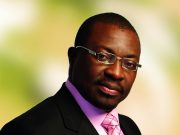










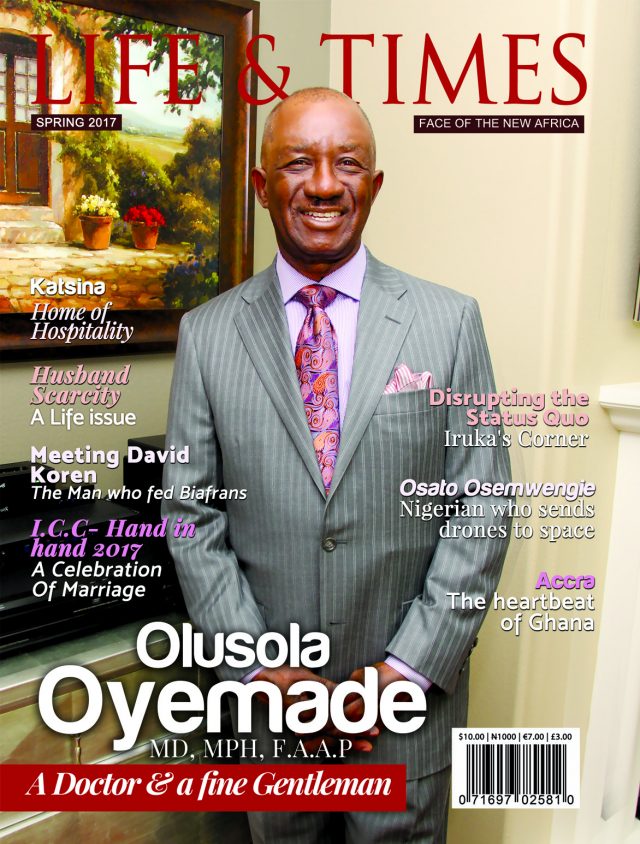
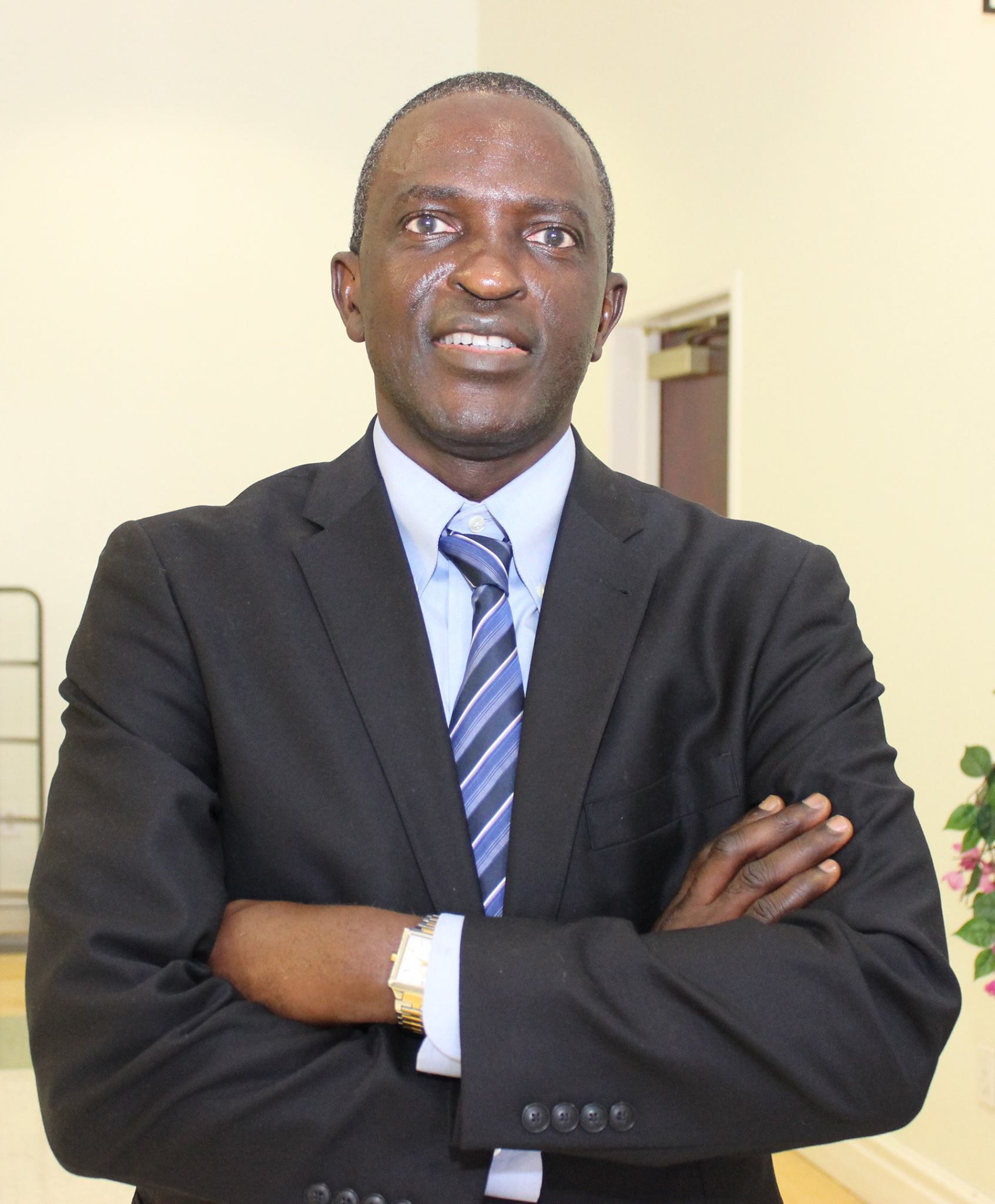
Dr. Godwin Maduka – Harvard Trained Medical Doctor and Philanthropist
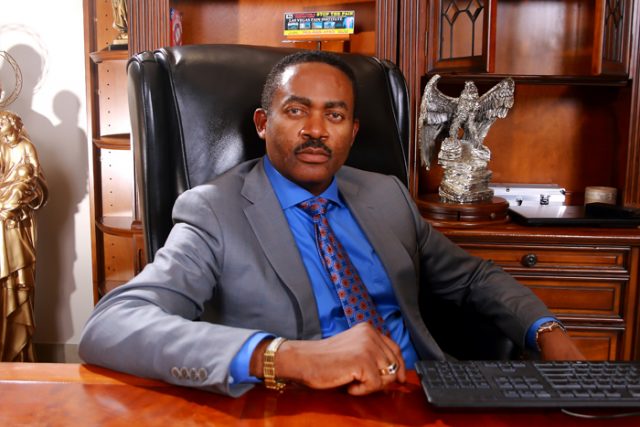
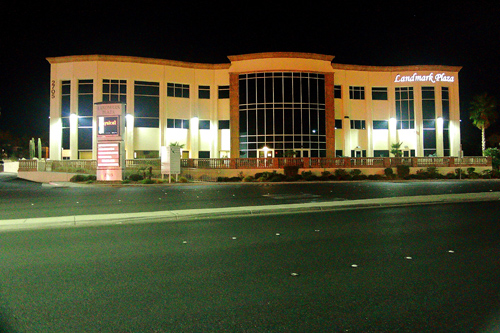
The story of his life has the makings of a legend or fairy tale… From excruciating poverty to being educated in Harvard as a medical doctor and just in his early 50s doing so much to serve God and humanity. The depth and reach of what Godwin Maduka has achieved, since coming to America in the 80s and qualifying as a Chemist and going on to obtain a Doctorate degree in Pharmacy and a Post Graduate Medical Degree from Harvard, is truly amazing. In about 25 years of practice Dr. Maduka has built five hospitals from the scratch in the Las Vegas Nevada area. His Las Vegas Pain Institute has been rated the top #1 in Pain Management in the U.S. by the health inspection community. Besides his work in Las Vegas, Dr. Maduka has transformed his hometown of Umuchukwu- building over 50 homes for poor kinsmen, building a town hall a magistrate court, a post office,, a police station, a police barracks, the divisional headquarters of the State anti Robbery Squad (SARS), a catholic church, a home for the catholic priests and reverend sisters, a monastery and presently constructing a 15 storey building that he wants to convert into a college of medical sciences.
He has also awarded full scholarships to hundreds of needy students in his town and all over Eastern Nigeria and donated a lot of money to help several communities around Nigeria. He has given away a lot money in free grants in micro finance schemes to kinsmen to start several businesses…
The amazing thing is that this man despite all his success attributes nothing to his abilities but credits God for all that his life has become and all that he is doing..
Listening to him and talking to him for several hours thoroughly made a major impact on me come and reaffirmed the fact that with hard work and divine blessing you can rise above your circumstances and be all that you can be…
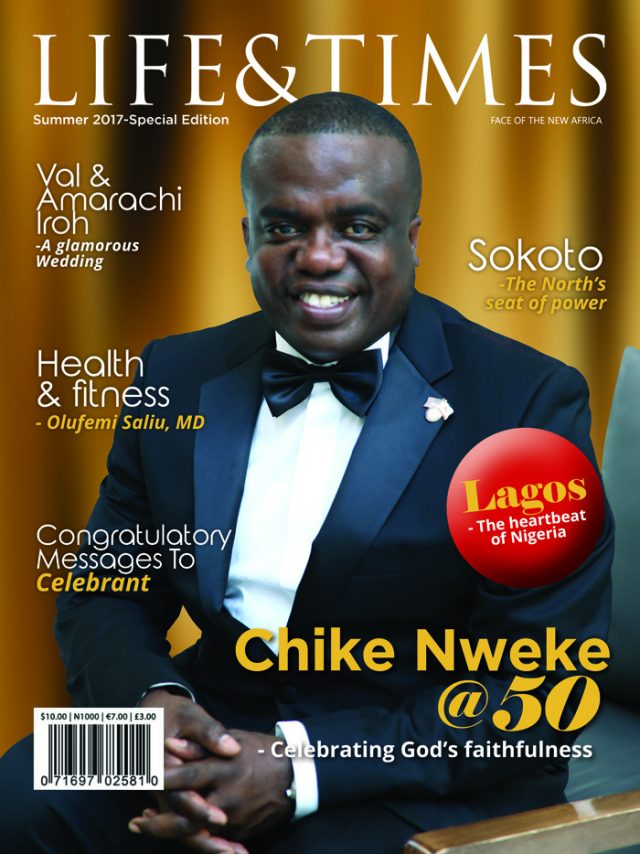
Following are excerpts of Dr. Maduka’s interview with our Publisher- Hon. Chike Nweke
 1. Q: Who is Dr. Godwin Maduka?
A- This is the first time someone has ever asked me who I am, and maybe today while I’m trying to tell you who I am, I will discover who I am myself. Well, I will try and keep it very simple. I guess to explain who I am is to start with what I believe in. Number one, I have the fear of God. That makes me who I am. I also believe that I have been blessed from childhood. So, being who I am, the person that I am, whether it’s my education, my business, my children and family all roots from my belief in God’s supernatural powers and blessing.
As I look at who I am, I do know who I am not. I don’t believe in seeing anybody suffer while I just watch, without trying to help. I know what it feels like to suffer; so I do not even wish to see my enemies suffer. I won’t cause suffering for anybody. I believe that happiness sometimes comes from the goodness we show to others. If you do something good for someone, it will make them happy and also gives you happiness. I also believe that we are all created equal and that God chooses to give talent or money or other attributes to whom he pleases.
I am someone who believes in eternal life and want to be accountable to my maker when I get to heaven. I am someone who also likes to have fun. I like people around me and enjoy good company. I don’t like confrontations. However, if confronted, I can push back. The people I don’t like on earth are those who are negative and evil people who go after someone who have not wronged them. I am the guy that believes that nobody should be discriminated against because of gender, race, religious background, age etc. I also believe that success comes from hard work. You also have to have faith.
2. Q: Tell us a little bit about your growing up years and early education in Umuchukwu?
A-My formative years were very exciting and interesting. My parents were very responsible and determined to raise us to be responsible and productive adults. Period. That’s why it is very important that we raise our children to become responsible. When we leave them alone they won’t know how to handle things. If you start teaching a child the secret of success by designating time to play, time to relax etc, then they grow up and become responsible. If you teach a child early enough to learn to take responsibility it becomes engrained in their brain. So from my earliest childhood it was already engrained in us that hard work is the only way to succeed and that we have to take responsibility for our actions.
Our parents loved one another very much and were strong parents that complimented each other very well. They had nine of us. Some of us were born before the war of 1966. But growing up in those days, we had one love which was the community of people that works directly with each other. The people actually can see you doing something wrong and would correct you. Parents would not say, “How dare you talk to my child” if you tried to correct them. It was the community that helped raised the child.
In retrospect, I had a wonderful childhood. I remember as a child joining masquerades, dancing to the rhythms of the talking drums. I remember dancing in the moonlight and playing moonlight games. My childhood was one of fetching water from the village stream, one of going to the farm, planting yam and cassava and waiting for a bountiful harvest. It was also a life of climbing the palm trees to harvest nuts for food and to sell for school fees or the next meal. Also, it was one of going to the stream to fetch water to cook and eat before going to school. Looking back now, it was bare existence, but back then even when we were in poverty, we never felt poor. We were content with what we had and we were happy. We were enamored to devout Catholicism in those years, praying with our rosary, and praying to Virgin Mary all the time. Those were years of being in the choir, one of going to Bible studies and respecting the Reverend Fathers and Clergy. The curious thing was that my parents were not Christians. Yet, they fully encouraged us to embrace the faith. I still don’t understand it. But our parents made sure we go to church every Sunday, yet they did not go. I did ask my mother to become a Christian but she only agreed to do that when I stayed 12 years in America without coming home. As a result, she went to church just so I can come home and she became a devout Christian.
Growing up in the village was a lot of hard work too. We struggled for money, for food and school fees. My early years were even tougher. Though it was beautiful, I had so many mishaps that I should not even be alive today. Due to the fact that we always had very marginal income I had to become a man before I was a child. Can you imagine your child at 13 years old climbing a tree that is about 50 feet from the ground to get the palm nuts and make oil out of it? That is how we sustained ourselves to pay our school fees to stay in school. With marginal income my father would bring from the native doctor business, and the work that my mother would get from the little farming we do, they were able to send off all their children to school. Although, they were able to send all their children to school, as children we had to contribute too. The unfortunate thing in my childhood that I don’t envy was when I fell from the palm tree seven times to the point of being disfigured. As a child I was placed in risky and harmful situations just to survive. At that time I did not think much of it because it was all that I knew. The only time I knew something was wrong was when I was in secondary school with my oldest brother whom has passed away now. He and I went to the hospital back then and found out that I had a spinal compression from all the multiple injuries sustained from falling from the palm trees. I was actually meant to be 6 foot 4, but I am close to 5’8, 5’9 because I had a spinal compression. So you see I lived by the mercy of God. My body is one of a miracle. Even my mere existence is a miracle. The last fall I had, my head was sandwiched between two sharp objects. So even then, God was sending his angels to guide me because God had predestined what He wanted me to be. At 13 years of age, by his divine power, God prevented my head from being crushed by those sharp objects.
3. Q: You really put it together. Your personality comes through as a very positive and forward thinking person. You have so much interest in appreciating God, and you believe in humanity, and your love for humanity shows clearly as one who believes in lending a helping hand where you have the opportunity. I know this is driven by your love for your creator God. Now, you studied chemistry, pharmacy and later on medicine. What was your driving force in getting yourself this together and launch yourself into where you are today.
A-I grew up in an agricultural rural community with my parents. I saw my parents work hard. My mother worked hard as a petty trader, farmer and home maker. My father was a native doctor and a very good one. I saw him relieve a lot of people’s pain. I saw him give hope to women with infertility. I saw him treat the people with dignity. I saw him as a happy man.
In those days 80% of the men in my village were native doctors. They traveled all over Eastern Nigeria to practice their trade. There were over 2,000 native doctors called “Dibia.” Not all were good. Some engaged in evil and voodoo magic. The good “Dibia” made diagnosis and treated the sick and gave them hope. What I have become today was inspired from those experiences from my childhood. This is not to make it sound good, but that is where it all started. My father’s profession as a native doctor was my first motivation to become a chemist, a doctor and pharmacist. I wanted to know the composition of all those herbs my father would give to his patients and the effect of how those medications worked. While in school in Nigeria, I concentrated on excelling in sciences to fulfill my dream of becoming a doctor and following in my father’s footsteps. However, I had no one to sponsor my education to train as a doctor in Nigeria. One of my relative whom was sent to America by the support of the community had sent applications home to his brother, and I took one of those applications to fill out.
My younger brother and two other relatives came up with the money I needed to travel to the US. When I got here, I studied very hard and took extra classes. I graduated in a year and a half with summa cum laude in Chemistry, class of 1984 from Rust College in Mississippi. That was the starting point of this goal in striving to reach to the top. At that point I knew that I still believed in living that childhood desire. God has been merciful to me in actually letting me live out my childhood dreams and desires. I studied chemistry in my first degree because I believed like they all did in Nigeria that a Chemist is equipped to administer medication. I later found out in America that it was a misconception, and that a Chemist is just a scientist and that you have to be a Pharmacist to administer medications.
4. Q: You studied Pharmacy @ Mercer then went on to University of Tennessee Medical School and Graduate Medical Training at Harvard. What propelled you to combining pharmacy and medicine as career choices?
A-After I graduated with a degree in Chemistry from Rust College, I went on to Pharmacy School at Mercer University, and obtained a doctorate degree in pharmacy in 1988. After the Pharmacy program, I proceeded to Medical school at University of Tennessee School of Medicine to start the next phase of my journey. When I obtained my medical degree it was time to figure out what profession I wanted to practice. I considered chemistry, pharmacy, and medicine background. Then I decided that pursuing Anesthesiology with Interventional Pain would make use of my education and training . At that time, for a little poor boy from a rural African village, it seemed like I had come a long way. But, I was still not satisfied. I continued on. I applied and was accepted to the graduate medical training at Harvard University School of Medicine in Boston Massachusetts to train as an anesthesiologist. By being accepted into Harvard and graduating from there as an anesthesiologist, proved to me that there is an omnipotent God, a God of all possibilities…
The Harvard program was very tough and challenging, but God saw me through. I graduated from Harvard and worked for one and a half year with other folks before The Las Vegas Pain Institute and Medial Center of which we have 5 locations in the Las Vegas Area. We have also been rated the top #1 Pain Management in the U.S. by the health inspection community.
5. Q: You are also an adjunct clinical professor @ Touro University school of Osteopathic medicine. How do you find time from your hectic practice to teach?
A-I have always loved the academia and being an adjunct professor at Touro University School of Osteopathic Medicine is my way of fulfilling that dream of being in the academia and giving back to the community. This also gives me the opportunity to inspire and impact positively on the up and coming student physicians.
6. Q: You have built over 50 homes, schools, a civic center etc. in your home town of Umuchukwu in Orumba South Local Government Area and helped several other communities. Just last weekend you donated a large sum to Mbano women to renovate schools in Mbano. What propels you to give so much?
A-The reason for my philanthropic work is to give back and thank God for all he has blessed me with. I believe that it is from God that all blessings flow and I cannot possibly out give him. I do that with the overwhelming conviction and belief that everything that you do, whatever you are, came from God himself. So you see if you believe that, when you make a donation it does not bother you. I also believe that it is what you do when you are still alive that matters.
So that is the reason why I went home to make a little change in my home town Umuchukwu. I left for America in the 1980s and came back in the 1990s and the community was still as it was. Most of the people were still poor subsistent farmers. So many people were very poor and the sickness was abundant. It was then that I decided to help the community grow and develop with the blessings that God has poured into my life. That is how we started sending children to school, secondary schools, and Universities to train as lawyers, doctors, pharmacists, engineers, school teachers etc. We also started a micro finance program to give free grants to people to start a vocation or a trade. Several people came to me complaining that they did not have a decent roof over their heads. So we developed several thatched huts in the town and we started helping people who did not have homes. We built several homes which were given to people. We also helped build a monastery for the Mother of Peace Congregation which is a United States based Catholic congregation. We also helped the community build a Catholic Church, residence for the parish priest, a police station, police barracks and the State Anti-Robbery Squad Divisional headquarters. Other projects include the town hall, a filling Station, a magistrate court and we are currently constructing a 15 floor multiplex planned to house Offices and the Medical College of the Anambra State University College of Medical Sciences.
I attribute all these, not to my own power but to the goodness of the Almighty God. I want to thank and acknowledge the first born child from my mother’s womb Chief Joseph Maduka, late Marcel Maduka, late Obi Maduka, Hycinth Maduka, Barrister Kenneth Maduka, Barrister Ifeoma Maduka-Arisa, and my nephews Doctor and Engineer Kingsley Maduka, and Chukwudi Ogbonna who were on ground in Umuchukwu supervising and actually doing the construction work over the years. I want to also acknowledge Arc. Nnaemeka Okpara who designed most of these projects. I also have very fond memories and gratitude to my late Uncle Pius Onwu in mentoring and encouraging me during my early school days in Nigeria. I will never forget the contributions of my late uncle, Igwe Michael N. Ukaegbu who is the founding father of Umuchukwu and who created the enabling environment for all these developments. Of course I could go on and thank many more wonderful people but the list will be too long. But I do want to give back all the praise to God who made all these possible.
 7. Q: There has been some past controversy regarding the change of name of your home town to Umuchukwu. Please address this issue and your role in the name change?
A-Like I told you earlier, a lot of my kinsmen were herbalists or native doctors. There were two categories of them. Those like my father who used their knowledge of herbs to help people with ailments- infertility, malaria, and other sorts of diseases to get better. There were however, the other category of evil “dibia” similar to witch doctors and voodoo men who did terrible things such as burying 16 year old virgins alive to harvest their spirits for evil deeds. There was so much evil in the town because of all these evil deities that there was no progress and the people remained poor and in darkness. Development eluded us. We had no motor-able roads, no town hall, no church parish.
Yet, we had grooves for the deities in abundance. In fact the name Nkerehi- was linked to fetish and deity worship. The people of the town felt they had had enough when worshippers of these deities wanted to resist all development coming into the town like constructing of the town hall and the Catholic Church because they claimed the land upon which they will be built belonged to the deity. That was why a majority of the town decided that they had had enough and destroyed all the deities and had a referendum to change the name of the town from Nkerehi to Umuchukwu- which means- Children of God. This referendum was organized by the State Government under Governor Peter Obi and an overwhelming majority of about 90% of the town voted for the name change which was then gazetted as law by the State Government. Subsequent challenges by those opposed to this in courts of law have been defeated and the name change was approved by the overwhelming majority of the town stands. The town has experienced so much positive growth and development since the name change.
8. Q: What propels your drive for excellence and achievement? A-What drives me is the desire to be the best in what I do and to leave a positive name and mark for posterity.
 9. Q: Tell us a little about your family and how supportive is your wife to all that you do
A-I have a wonderful, beautiful and supportive wife named Stella and we are blessed with five adorable children. Our children ages, range between 8 and 16, so you can imagine how busy our daily life is. My wife immigrated to America when I finished training from Harvard and was starting my own practice. When I think about her, I remember how supportive she was during the dark hours of my practice when there were a lot of push backs and bigotry which made it difficult to succeed. In the early years, before we had children she used to go to work with me and patiently waited in the lunchroom so we can go home together. She was there for me every step of the way and we never stopped praying.
I also remember when I needed a loan to build the practice; she would accompany me through all those meetings with various banks in the city. She is an intelligent woman. She completed her Bachelor’s degree in Business and is currently pursuing her Master’s degree. Being strong at home and basically raising our children on her own, has allowed me to dedicate the time and hard work needed to accomplish what I have done so far.
10. Q: What is next for Dr. Maduka?
A-I will go where God leads me. I will not go before him, but wait upon his divine guidance.
11. Q: What are your hopes and dreams for Anambra state and Nigeria.
A-I dream of an Anambra State and Nigeria that is more prosperous, where people live in abundance and plenty, where the dividends of development will reach every home and every citizen.
12. Q: What advice will you give to a new African immigrant on succeeding in America? When your work is done, how will you Dr. Maduka, like the “Lion of Africa” want to be remembered?
A-My advice to immigrants that come to America especially those from Africa is to follow their dreams and not be deterred by whatever challenges they may face.
When my work is done, I would love to be remembered as a lover of God and as a man who did his utmost best to help humanity.
Chief Edward & Mrs. Eunice Ihejirika Celebrating an Icon @ 90, and 66 years of marraige
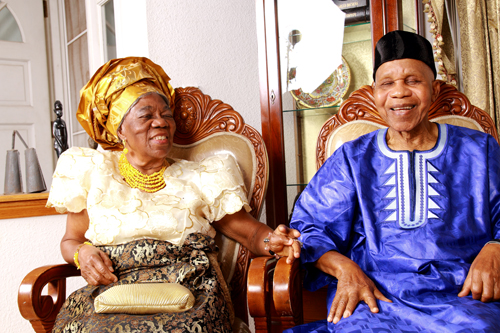
Chief Edward Osuchukwu Ihejirika was born on 1st Sept, 1926 in Alaike, Ikenanzizi, Obowu, Okigwe Division of Owerri Province Eastern Nigeria. Alike- Ikenanzizi is in present day Obowu Local Government Area of Imo State, Nigeria.
Young Edward attended: St. Enda Catholic School, Ikenanzizi from 1930-1937.
St. Joseph’s Catholic School, Kaduna from 1937-1942 obtaining his first school leaving certificate there in 1942. He proceeded to St. Thomas’s College, Igbuzor from 1943-1946 obtaining his Teachers’ Higher Elementary Certificate in 1946.
He also obtained his Teachers’ Senior Certificate in 1948 and a Bachelor of Arts degree in the 2nd Class Honors in History from the University of London in 1952. His degree from the University of London was obtained as a correspondent student in the University of London.
Chief Ihejirika was variously Headmaster St. Joseph’s School Kaduna 1947-1948 a position he held at the age of 21 becoming the youngest Nigerian school headmaster in colonial Nigeria. He was also headmaster at St. Teresa’s School, Ikenanzizi from 1949-1950. He also taught in New Bethel College, Onitsha from 1951- 1952
and Government College, Ughelli from 1952-1956. Some of his students at Government College, Ughelli were Retired General David Ejoor, his Godson in Baptism and former Governor of the Mid-West, Mr. Sam Amuka-Pemu, Publisher of Vanguard Newspapers, Peter Enahoro (Peter Pan) among many others.
He then went on to become a Provincial Education Officer in several locations including – Ikeja, Lagos, Akure, Warri and Benin from 1956-1973. From 1973 to 1977 he was Chief Inspector and Director of Education Midwestern, Nigeria from where he retired in 1977.
Since his meritorious retirement, Chief Ihejirika has been living in Benin City where he runs a successful agricultural business.
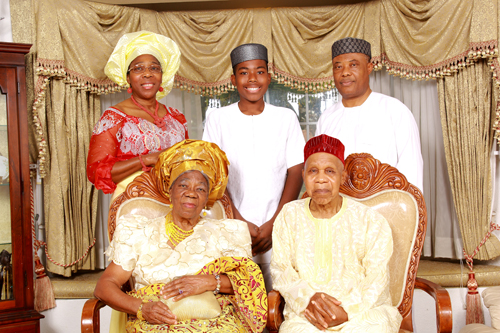
Chief Ihejirika met his wife Eunice in 1948 and they were married in 1950. Their marriage of 66 years have been blessed with eight children:
Dr. Adaugo Okorocha
Dr. Arthur Ihejirika (Late)
Engr. Chima Ihejirika
Dr. Ivy-Joan Madu
Arc. Edward Ihejirika
Attorney Fred Akala Ihejirika
Mr. Caesar Nachi Ihejirika
Mr. David Izu Ihejirika
several inlaws and grandchildren.
In this interview with our Publisher – Hon. Chike Nweke, Chief Ihejirika and his wife talk about their lives, their career, raising up their eight successful children, the secrets behind their long marriage and their hopes and dreams for Nigeria.
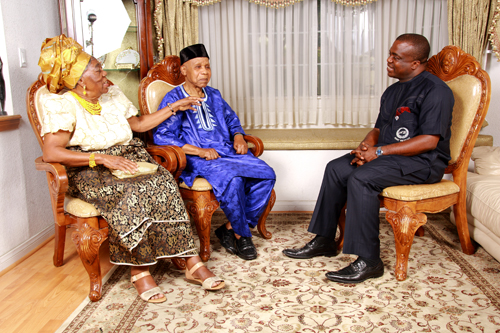 To: CHIEF EDWARD OSUCHUKWU IHEJIRIKA
Please tell us a little bit about your early background and your growing up years?
My parents Fred and Mary, both of whom were literate in Igbo and partly English, put my sister Elizabeth and me to school very early. For me schooling was very tedious and long and included three years of Infant school before I got admitted into elementary school stage which was unending, but had to end! Then, each year anyone failed the promotion examination he or she repeated the class and kept repeating it. For how long? Nobody would say, so the option was to work hard and never fall into that category.
Furthermore, because of the constant flogging we were receiving from the teachers, especially as boys, schooling was indeed scary. It was parental pressure that kept me at school or I would have run away like some of my classmates. Teachers were thus one of my earliest antipathies and if I later on became a teacher, it was as my cross to carry for want of a better career. My supposed cleverness pointed in no other direction.
Only a few children went to school in those days and the school environment was very hostile; and in spite of my change of school in 1937 from St. Enda’s Catholic School, Ikenanzizi, to St. Joseph Catholic School, Kaduna, the whipping continued.
You were educated in Eastern, Northern, Midwestern and Western Nigeria, what significant experiences did you have during your school years and how did education in these different environments shape your world view?
The different backgrounds gave me all the knocks I needed for early maturity and I was ready not only to go around Nigeria, but into the world. I became accustomed to working even in alien environment where perhaps I knew nobody as was once the case in Germany. I picked up no significant prejudices because basically all people are the same. On the other hand, because of the adjustments I was obliged to make to accommodate changes in local environment, my moves cost me some of the joys of childhood and the company of my parents. I wept on occasions.
You were reported to have been the youngest headmaster of a school in colonial Nigeria when at age 21 you became headmaster at St. Joseph’s School Kaduna (1947-1948).What challenges did you face on taking such a leadership position so early in life?
All the teachers under me were older than I was and most of them had taught me in the same school before I went to college. I could not be bossy with my eyes open, I had to learn to maneuver and give them the respect due them as my former teachers. I never had any confrontation with any of them, not even Eugene Oragui. I had a very painful and unforgettable experience with Mr. Oragui. When I transferred mid-year in 1937 from St Enda’s School Ikenanzizi to St Joseph’s Catholic Kaduna, I arrived with my transfer certificate to continue in Standard 2, the headmaster instructed Mr. Oragui to admit me into Standard 2, but he refused. He told the headmaster that I was too young for his class. I had to be sent to repeat Standard 1 which I had already completed and passed in 1936. It was devastating for me. Additionally, some of the senior school boys were my own age, or older, and disciplining them was not easy, but we managed.
My differences were with the Irish School Manager, Rev. Fr. Green. He denied me enough professional room in which to operate. We quarreled, and I was on the move.
Please tell us about the different positions you held in different parts of Nigeriaas one of Nigeria’s foremost educationists before you became Chief Inspector and Directorof Education Midwestern Nigeria?
My next move was back home as Headmaster of St. Teresa’s Catholic School (Formerly St. Enda’s) Ikenanzizi for two years from 1949 to 1950, at the end of which year I married. We then moved. Our moves were to become exceptional and it took us to Onitsha where I taught at New Bethel College from 1951 to 1952. Upon my graduation with a B.A. degree (Second Class Honors in History) of London University in June that year, I was forthwith recruited as Education Officer into the British Colonial Civil Service in Nigeria on October 9, 1952. My initial posting was to Government College, Ughelli, where I taught English language, History and Latin from 1952 to 1956.
I then had my first field posting as Provincial Education Officer, first to Akure, Ondo Province, where I succeeded Mr. S. O. Sangowawo who was retiring from service; and I was there from 1956 to 1957 when I moved on to Ikeja, Colony Province to replace Mr. P.N.C. Molokwu who also was going on retirement. My stay in Colony Province from 1957 to 1959 was very stormy owing to the work I did on impoverished schools. My predecessors, White and Black, had done nothing. I got some of the worst ones totally rebuilt! And then in 1959 I had taken charge of the registration of voters and virtually had to run!
I had taken on too many challenges and some called me a mad man and after cooling my feet for a few months at the Ministry of Education Headquarters in Ibadan as the Officer-in-Charge of Educational Publications, I was back to Provincial work. I was transferred to Benin-City in 1960, Ondo and Warri in 1961, and then back to Benin-City. It was a lot of going around and it was probably punitive and in fact Edith my eldest daughter who was at school in Ondo wanted to remain there and in 1961 refused to move with the rest of the family to Warri until I pleaded with her. I received a double promotion in 1961, but no matter, I felt that my years in the public service were wasted and I knew it, and I began to plan for early retirement.
My transfer to Benin-City in 1961 proved to be permanent. It became the capital of the new Midwestern Region in 1963. Mr. S. F. Edgal and I were the most senior officers and I was ready to concede to him as native son in the running for the office of Chief Inspector of Education, but Premier Osadebey and his henchmen refused to look at either of us and he took the unusual step of hiring Mr. C.M. Ebert, a retiree in his own country, all the way from Australia as the first Chief Inspector of Education. Mr. Ebert was unhappy about the situation and was ardent that I should succeed him. I was sent away to Australia for three months for this purpose, but with the on-rush of the Nigerian/Biafra Civil War soon after my return, I could not stay back in Benin-City waiting for a promotion! And here is another angle to it. Long after Mr. Ebert had gone back to his country, the office of the Chief Inspector remained vacant throughout the civil war and it was precisely a day after my return to Benin-City that Mr. Edgal was promoted Chief Inspector! I felt sorry for him for waiting so long. He never supervised my work or gave me an assignment, not even once.
From 1974-1977 you were Chief Inspector and Director of Education Midwestern Nigeria.
How did you achieve this great feat so soon after the Nigerian/Biafran war? Did you experience resistance in the performance of your duties in this position?
I was an innovator, known to educationists all over Nigeria and after the Civil War, I was immediately resettled in office unlike many other Igbos, and when the Military Governor, Colonel S. O. Ogbemudia personally discovered the level of my talent, he threw in my way all the educational challenges he could think of, and we began to collaborate and it made Benin-City the hub of visiting educationist from all over.
The highlight was when Dr. Ukpabi Asika, the Administrator of East Central State, sent Dr. Adiele, his Commissioner of Education to Benin-City to request that I be released for Special Duties for six months in Enugu to help him re-engineer his Ministry of Education. In return, the Administrator would send to the Governor a good number of University lecturers for his new University, the University of Benin. Dr. Adiele met me in my office and I was willing, but Governor Ogbemudia and his Commissioner of Education, Chief Edwin Clark, refused the exchange.
{By the way, I was on the recruitment tour to London for the first Rector of the University of Benin, Professor Hill, in 1971 and we were very well received at the prestigious Actenum Club. It shows the collaboration I am talking about between Governor Ogbemudia and me, a collaboration that continued in the reign of his successor late General George Agbazika Innih who became my very close friend for the rest of his life. Unfortunately, the Permanent Secretaries hated me but could not come close to the work I was doing.}
When I retired from the public service in 1977 prematurely for personal reasons, not one but six Directors were appointed to replace me. Was I being flattered or was there another angle to it?
 You were reputed to have crafted the policy for the 6-3-3-4 educational system in Nigeria as Chief Inspector of Education in Mid-Western Nigeria.What led you to this policy formulation and do you think that the policy has been well implemented to date?
I was not yet a Chief Inspector when I was appointed a member of the Simeon Adebo Education Committee which was set up by the Federal Military Government of General Gowon in 1973 to review the education system and bring it up to date. My opposition to the British Colonial system of education was well known. I suffered from it and was always carping at it, unlike many of my educational colleagues who accepted it with docility. We were at a preliminary evening meeting at the then University of Ife where, as the first to speak, with Chief Adebo presiding, I made a long speech in favor of an education that was rooted in our potentials as Africans and not based on second-hand information from foreign sources, which we are unable to handle and assimilate. I spoke for education from the ground up that was there at our finger-tips and was therefore creative and reflected our local conditions as all basic education should be. I also urged that we should abandon the rote learning of the old colonial system which was barren and time-wasting and delayed early intellectual development which is critical to the rest of life. Of late developers, only a few succeed, I pointed out. My speech was applauded and every other speaker agreed with me. That was the apparent take-off of the 6-3-3-4 education system, at least philosophically.
Chief Adebo was very pleased and he came in at this point and asked me what name I would recommend for the new system. As I already mentioned this in the course of my speech, I said we could call it the 6-3-3-4 education system until a better name be found, if necessary.
The report that eventually came out after several other meetings were resumed in Lagos greatly disappointed me as if nobody really understood me. My original ideas were missing from the report. Add to this, the new system was not implemented until after I had retired from the public service and as I was never again consulted, I had absolutely no way of influencing the outcome. The new system may therefore not have given us our full potential in education.
To Mrs. Eunice O. Ihejirika
How did you meet your husband and when did you get married?
A kinsman and a family friend Herbert Okonkwo, told me that a certain Headmaster from Northern Nigeria was looking for a wife; and he asked me if I was interested. Knowing that most Headmasters were middle-aged or older, I demurred and did not give Herbert a positive answer. Why should he be interested in me, an old Headmaster who should have been married long ago? This was what I said to myself. To Herbert, I said “well, until I see him!”
Weeks later on a Saturday while I was a teacher at Catholic Girls’ School, Itu-Ezinihite, Mbaise; Herbert came in company of a lady and three gentlemen and the youngest of the group was the Headmaster in question, and handsome! I was blown off my feet and two years later, on November 26, 1950, we were married.
You have been married for 66 years and have been blessed with eight children,several in-laws, grandchildren and one great-grandchild. Please tell us a little bit about your children and the secret of your very long and happy marriage.
We maintained an open house until old age and all visitors were welcome including off course relatives, in-laws and friends. We did not send out invitations, the visitors came as they needed us. I was a sort of “universal hostess” and during the civil war our home swarmed with refugees and the needy. I headed a large voluntary organization – The Women’s Voluntary Service – that organized and delivered food, medicine and clothes to war displaced people, the aged and the poor. Through this our children learnt service to others and the community. After the civil war my husband and I helped many Igbos returning back to Benin-City and with our contacts we helped them to resettle among the Binis.
All this helped our children also because as they grew up and traveled out, they received help when they mentioned our name. As we were busy with ourselves we were also busy with others even with total strangers. That is the secret of our success.
Please tell us your experiences of raising your very successful children. Did you have to stay home to raise them?
We succeeded with our children because we invested heavily in them. This boosted their confidence and left them in no doubt about our commitment to their welfare. Even when I was in England for three years, my husband took care of my daughter Ivy who he home-schooled and he took care of the other three children.
We loved them equally and although we paid more attention to younger ones, we were even-handed in dealing with them and showed no partiality as between boys and girls for example.
I resigned from teaching as soon as I married to give my full attention to work within the family and I have been busy ever since even today as I went from mother, to grandmother and to great-grandmother.
Having served Nigeria in the colonial era and post-independence, do you recognize the Nigeria you see today? What are your hopes and dreams for Nigeria?
In fact, I have lived through three distinct lives in one, thanks to a long life. The Colonial era was peaceful. There was no politics, no sudden wealth to make anyone go crazy, and public workers were dedicated and fully employed and there were no local issues to distract them because in most cases they worked far away from home. The post-independence era and the haggling for positions brought riff-raffs than normal into the system of governance, and a rogue won his election sooner than an honest man. It made Nigeria unfit for democracy and made democracy itself a tall order for most Nigerians.
The post-civil war (or post-military) era in which we now live, is beyond description. It turned the country’s legislatures into a huge dump, a very mighty dump, into which the country’s fortunes are shoveled perennially to points of no return. Call it a graveyard, and we are talking about the same thing. There is waste but no growth. We talk but don’t know what to do.
What advice will you give to young couples about staying happy in marriage and raising successful children?
To be happy, the couple must be friends and playmates from the very beginning. Friendship lasts longer than romance. Disagreements are inevitable, but never bring outsiders, not even your own parents into your quarrels. And never quarrel in the presence of your children or you will pay dearly for it years later. Your children succeed as much as you want them to succeed by your own efforts. Never discourage a child. If you have no money, pray for him. Don’t steal. It does him or her no good. A thieving father is hard to swallow. I know some childless marriages, childless but unintended, that have been very happy.
Wiz Kid: Africa’s Artiste of the Year 2013

When he began his musical career, Ayodeji used the name “Lil Prinz” but changed his stage name to WIZKID at the age of 17 in 2006 when he began to gain stardom and national acclaim.
The debut album was well received by Ayo’s family, friends, other artists and the church. He went back to the studio thereafter to perfect his skills and develop his talent. by 2006 when he took on the stage name WIZKID he was much more matured musically and started working with some of the big names in Nigeria’s musical landscape like Neto C and Ikechukwu.
His music has continued to enjoy sustained radio plays since 2006 while he continued to enjoy collaboration with the existing big names in the industry. WIZKID’s major break in the Nigerian music industry came in 2009 with his collaboration with one of Nigeria’s best rappers MI Abaga on the “Fast Money Fast Cars” track which drew major attention to WIZKID’s sultry voice, engaging stage personae and unique swagger and style.
WIZKID is also a song writer and writes most of his songs. He has also been featured in several TV commercials the most recent was the PEPSI 2011 advert where he featured alongside female super star TIWA SAVAGE. He also featured in the TV commercial “Turn by Turn” by KEL’s .
1n 2009 he signed a multi million naira deal with Nigerian leading R & B artist, producer and manager- the versatile Banky W who owns the Empire mates Entertainment 9EME) recording label. WIZKID has continued to release hit songs with EME records since 2009 and he presently enjoys stardom all over Africa and amongst Africans all over the diaspora. He has performed internationally with renowned artists like Chris Brown, Sunny Ade, Akon, Kardinal official, Young Jeezy etc.
The release of his hit singles,” Do’t Dull”, “Holla at your boy” and “Tease me” in 2010 confirmed WIZKID as a Nigerian musical star. After the release of his debut album “Super Star” in June 2011 WIZKID performed sold out concerts in Nigeria, the United States and in the United Kingdom.
In 2012, Wizkid signed a one year endorsement deal with Pepsi, allegedly worth $350,000 U.S dollars. He traveled to Beirut, Lebanon with Tiwa Savage for a Pepsi commercial shoot.On May 28, 2013, Premium Times reported that Wizkid signed a one year deal with MTN Nigeria. Moreover, the news source reported that Wizzy’s Pepsi contract was renewed for another two years.On October 23, 2013, Bellanaija reported that Wizkid signed an endorsement deal with Guinness for the “Guinness World of More” concert. The concert was held at the Eko Convention Centre of the Eko Hotel and Suites in Victoria Island, Lagos, on November 3, 2013.
 His work and contributions to the Nigerian Music Industry has earned him several achievements, including a BET Awards, a MOBO Awards from two nominations, a Channel O Music Video Awards from six nominations, three Nigeria Entertainment Awards from eleven nominations, a Ghana Music Awards from two nominations, two Dynamix All Youth Awards from three nominations, two City People Entertainment Awards from 4 nominations, and a Future Awards, among others. In addition, he has been nominated three times at the MTV Europe Music Awards as well as four times at the World Music Awards. He was ranked 5th on Forbes and Channel O’s 2013 list of the Top 10 Richest/Bankable African Artists.In February 2014, Wizkid became the first ever Nigerian musician to have over 1 million followers on Twitter.
Wizkid’s most notable songs include “Holla at Your Boy”, “Don’t Dull”, “Love My Baby”, “Azonto”, “Pakurumo”, “Tease Me/Bad Guys”, “Dance For Me” with EME, and “Jaiye Jaiye”, “Caro” among others.
His discography resume includes collaboration with international and domestic acts such as Bracket,Angel[, Lynxxx, Iyanya, Wande Coal, Ice Prince, R2Bees, Wale, Young Jeezy, Akon, and Femi Kuti,] among others. Wizkid’s debut album Superstar was released in 2011, He is currently working on Chosen, his second studio album scheduled to be release in 2014
The World of Davido!

His 2011 single, “Dami Duro”, was well-received throughout Nigeria. Along with his elder brother Adewale Adeleke, Davido is the co-owner of HKN Music (a record label home to Sina Rambo, B. Red and DeeKay). He has produced for numerous artists, including Naeto C, Skales, Tiwa Savage and Sauce Kid. In April 2012, he signed an endorsement deal with MTN Nigeria. On October 23, 2013, Davido partnered with Guinness for the “Guinness World of More” concert. Davido has won a BET Award, a Kora Award, a Channel O Music Video Award, a Ghana Music Award, a Nigeria Music Video Award, two MTV Africa Music Awards, two African Muzik Magazine Awards, five The Headies Awards, seven Nigeria Entertainment Awards and two Dynamix All Youth Awards, among others.
Born in Atlanta, Georgia, Davido relocated to Lagos at a young age. He released his debut album Omo Baba Olowo in 2012, which includes the singles “Back When” featuring Naeto C, “Dami Duro”, “All of You”, “Overseas” featuring Sina Rambo, “Ekuro”, “Gbon Gbon” and “Feel Alright” featuring Ice Prince. Davido has released the singles “Gobe”, “One of a Kind”, “Skelewu”, “Aye”, “Tchelete (Goodlife)”, “Naughty” and “Owo Ni Koko” off his upcoming album which was slated to be released in the fourth quarter of 2014.In a 2014 interview with the Nigerian Tribune, Davido said that his second studio album will not be released in 2014
.
 1992–2010: Early life
Davido was born on November 21, 1992 to Mr. and Mrs. Adeleke in Atlanta, Georgia. His father, Chief Deji Adeleke, is a Nigerian business magnate while his mother, the late Dr. Vero Adeleke, was a university lecturer.He attended The British International School in Lagos. Davido studied Business Administration at Oakwood University prior to relocating to Nigeria. He is currently studying at Babcock University in Ogun State.
2011–2012:Omo Baba Olowo
Work on Davido’s debut studio album, Omo Baba Olowo, began in 2011. On May 7, 2011, Davido produced and released his first musical recording “Back When”.The song served as the album’s lead single and received frequent airplay.[1] The music video for the single, uploaded onto YouTube on May 9, 2011, was shot and directed in Nigeria by Clarence Peters. Davido told Factory 78 TV that he recorded “Back When” in London.
Davido co-produced “Dami Duro” with Shizzi and released it on October 30, 201 The music video for “Dami Duro” was released on January 8, 2012. It was shot and directed in Lagos by Clarence Peters, and was released during the Occupy Nigeria protests. In an interview posted on Notjustok, Davido spoke on the release and composition of “Dami Duro”. He said he recorded “Dami Duro” in August 2011. Three months later, the song got leaked after he sent it out to some friends.
On May 6, 2012, HKN Music released “Overseas” as a single off the album. The unfinished version of the song leaked prior to the official release. On September 28, 2012, HKN Music released the music video for “All of You”. The song was produced by Gospelondabeat. When the song was released, it was rumored to be a “beef track”. In another interview with Factory 78 TV, Davido debunked the rumors and said he recorded the song with Gospel after meeting him at a mall.] To further promote the album, Davido released music videos for “Ekuro”, “Gbon Gbon”, and “Feel Alright”.
 2013–present:
In early 2013, Davido began recording his second studio album. On February 25, 2013, he released “Gobe” as the upcoming album’s lead single.The song was produced by Shizzi. Charles Mgbolu of Vanguard commented on the release of the single, saying: “It’s a beautiful song with a tremendous video running along. In Gobe, Davido is beaten up by thugs after winning the girl. It’s a song that exudes fun from start to finish.” The music video for the single was shot in South Africa by Godfather Productions The song was ranked second on Premium Times list of the Top 10 songs of 2013.
Davido announced via Twitter that the second single “One of a Kind”, from the upcoming album, would be released on May 13, 2013. The song was also produced by the aforementioned in-house producer. The music video for “One of a Kind” was shot and directed in South Africa by Tebza of Godfather Productions. It visualizes a united Africa rich in culture and music.
“Skelewu”, the third single from the upcoming album, was released on August 13, 2013.It was ranked 5th on the aforementioned list of the top 10 songs of 2013. The song peaked at number 1 on Afribiz’s Top 100 chart. A dance competition with a cash prize of $3000 (N480,000) was announced days after the release of the song. Davido uploaded an instructional dance video onto YouTube and asked fans to upload videos of themselves dancing to “Skelewu”. On October 10, 2013, Davido declared Bello Moshood Abiola the winner of the competition.[ A week after announcing the winner of the Skelewu dance competition, a Sesan directed music video was released to the public. Shortly after the release of the video, Davido took to Twitter to debunk the video and said that someone betrayed him by releasing it. He also said he’ll re-shoot the video with Moe Musa, a UK based music video director. Sesan commented on the release of the music video and said that Davido was satisfied with his contributions to the music video. He also said that it would be immature for Davido and his management to release inaccurate statements in order to defame his brand. On October 21, 2013, the official music video for the single, shot and directed in London by Moe Musa, was uploaded onto YouTube at a total length of 3 minutes and 56 seconds.
On February 2, 2014, Davido released “Aye” as the fourth single from the upcoming album. The song was produced by T Spice.[The music video for “Aye” was released on February 7, 2014; it was directed by Clarence Peters. According to the music video’s synopsis, “Davido plays a poor farmer who falls in love with the prince’s love interest.”
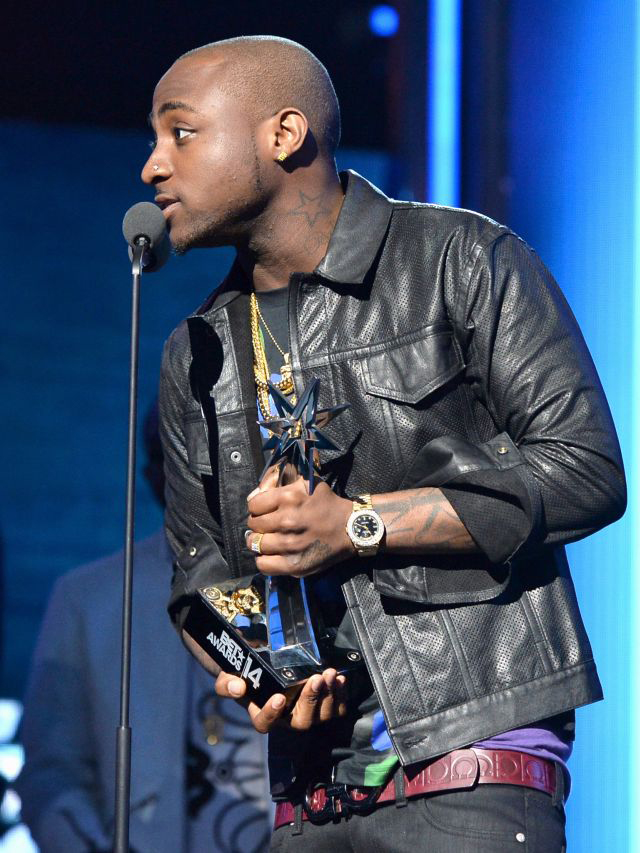 On April 30, 2014, HKN Music released the upcoming album’s fifth single “Tchelete (Goodlife)” featuring South African duo Mafikizolo. The song, which translates to “Money”, was produced by Oskido and Shizzi. Upon its release, the song was distributed by MTN’s Play and Callertunez platforms. The collaboration between Davido and Mafikizolo came about as a result of them networking at MTN Nigeria’s Elite Night event in December 2013.The music video for the song was shot and directed in South Africa. It was uploaded onto YouTube on May 1, 2014. Oskido and Uhuru made cameo appearances in the video.
In June 2014, Davido collaborated with Mi Casa, Lola Rae, Sarkodie, Diamond Platnumz and Tiwa Savage on a song for DSTV’s Africa Rising campaign, which was designed to inspire Africans to partake in community-based social investment projects. The music video for the song, released on June 24, 2014, was shot and directed by South African production house Callback Dream. The aforementioned artists performed the song at the Africa Rising launch ceremony in Mauritius. In July 2014,
Davido told The New Age newspaper that he plans on collaborating with American rappers Rick Ross and Meek Mill.
Endorsements
On April 6, 2012, Nigerian Entertainment Today reported that Davido signed a N30 million endorsement deal with MTN. The deal unveiled him as the face of MTN Pulse, a marketing campaign for Nigerian youths. On October 24, 2013, Pulse reported that Guinness Nigeria signed Davido to an endorsement deal. As part of the deal, Davido performed at the Guinness World of More Concert
alongside P-Square, D’banj, Wizkid, Ice Prince, Burna Boy, Olamide, Phyno, Chidinma, Waje and Tiwa Savage, among others.
Vitamin D: Not just for bone health – by Olufemi Y. Saliu, M.D.

I walk, I drive, and I work daily shielded from sunlight, the major driving force behind vitamin D production in humans. My day begins at dawn when I drive to my office in downtown Los Angeles. My whole day is spent in the operating room suite. At dusk, I go home without any exposure to the sun. When I finish work early, I work out at the gym, not at the park. Upon reflection, I believe this lifestyle puts me at risk for vitamin D deficiency. Because of the many medical problems associated with it, I expressed my concern during my annual medical checkup in February, 2016. The doctor tested me and notified me that I have vitamin D deficiency. After the appointment, I began taking a big dose of vitamin D once a week for twelve weeks, and then started taking a tenth of that dose every day.
 This health experience motivated me to review the current literatureonvitamin D deficiency.
Studies show that darker skinned people need more exposure to sunlight than lighter skinned people to have the same degree of vitamin D production. This is because melanin, the skin pigment, absorbs so much of the UVB radiation needed for vitamin D production that production is decreased by up to 99%. Applying sunscreen – used to prevent skin cancer – does the same thing to a light skinned person by absorbing UV radiation. Staying mainly indoors and dressing to cover sun-exposed areas of the body due to cold weather or religion increases the risk of deficiency. Furthermore, the capacity to synthesize the vitamin in the skin decreases with aging. Intestinal conditions that decrease vitamin D absorption, such as malabsorption syndromes and bariatric surgery, also result in the deficiency. In addition, obesity, or BMI over 30, is associated with an increased risk of deficiency due to trapping of vitamin D in the fat tissue. Other than through exposure to sunlight, man derives vitamin D from food fortified with the vitamin and oil-rich fish, such as salmon, mackerel, and herring. Oil from fish such as cod liver oil is another good source. The source of the fish is important. Wild caught salmon contains about 500-1000 IU of Vitamin D in 100g while farmed salmon contains only 100-250 IU of the vitamin in 100g. This is because the natural diet of wild salmon is richer in the vitamin than the processed diet of farmed salmon.
It is well known that vitamin D deficiency leads to reduced intestinal absorption of calcium and phosphorus resulting in mobilization and depletion of the minerals from the bones. This leads to rickets in the young, and osteomalacia and osteoporosis in the elderly, increasing the risk of fractures. The recent discovery of vitamin D receptors in the majority of tissues and of enzymes that convert the vitamin from inactive form to active forms shows that vitamin D has functions beyond optimizing the bone health. Chronic conditions that result from vitamin D deficiency may include cancers, autoimmune disease, infectious disease, insulin resistance, type 2 diabetes, hypertension, coronary artery disease and heart failure.
Unfortunately, the modern day lifestyle does not expose us to sufficient amounts of light to meet our needs. In addition, the amount of vitamin D in our diets is barely enough to meet the requirement for optimum bone health. To prevent chronic disease, more vitamin D is required. Because individuals have different lifestyles and diets, vitamin D needs vary from person to person. You need to have your serum level of vitamin D checked in order to truly know your nutritional needs.
However, unlike blood sugar and cholesterol, vitamin D is not routinely checked by doctors. As a result, when you go for your annual medical checkup, you need to emphasize your risk of vitamin D deficiency in terms of your lifestyle to your healthcare provider. Based on what your serum level is, the doctor will determine how much supplement is needed. You may not need any supplement. In that case, taking vitamin D supplements would be dangerous. Excessive intake of vitamin D has side effects, such as kidney stones, so allow your doctor to decide if you need supplements, and how much you need.

We have come a long way from the age of the caveman. The caveman made a living hunting and gathering food, exposed to the sun. The modern digital man makes a living shielded from the sun in offices, homes, cars, trucks, trains, and airplanes. The caveman ate natural food rich in vitamin D. The digital man eats processed food poor in vitamin D. We have always known that rickets, osteomalacia, osteoporosis and fractures result from vitamin D deficiency. Studies now show that the deficiency may result in chronic diseases such as type 2 diabetes, hypertension, and coronary artery disease.
So, evaluate your risk. If you habitually work from home, you may be at risk. If you are always on the road in your car or in your truck for business, you may be at risk. If you are always clothed from head to toe for any reason, you may be at risk. For the sake of your bone health and general health, talk to your doctor.
 References:
1. Okazaki R1, Ozono K2, Fukumoto S3, …
J Bone Miner Metab. 2016 Nov 23. [Epub ahead of print]
Assessment criteria for vitamin D deficiency/insufficiency in Japan: proposal by an expert panel supported by the Research Program of Intractable Diseases, Ministry of Health, Labour and Welfare, Japan, the Japanese Society for Bone and Mineral Research and the Japan Endocrine Society [Opinion].
2. MF Holick, NC Binkley…
Evaluation, treatment, and prevention of vitamin D deficiency: an Endocrine Society clinical practice guidelin
– The Journal of Clinical Endocrinology and Metabolism , 2011 – press.endocrine.org
– DOI: http://dx.doi.org/10.1210/jc.2011-0385
3. Michael F Holick and Tai C Chen
Vitamin D deficiency: a worldwide problem with health consequences1,2,3,4
Am J Clin Nutr April 2008
vol. 87 no. 4 1080S-1086S
4. John H. Lee, MD?; James H. O’Keefe, MD?…
Vitamin D Deficiency
An Important, Common, and Easily Treatable Cardiovascular Risk Factor?
J Am Coll Cardiol. 2008;52(24):1949-1956. doi:10.1016/j.jacc.2008.08.050
Dr. Olufemi Saliu, MD is a board certified anesthesiologist in Los Angeles, California that has been in medical practice since 1985. He has a special interest in writing about and educating people on healthy nutrition & wellness